



If your office chair keeps sliding down, the culprit is almost always a failing gas lift cylinder. This component relies on pressurized nitrogen gas and airtight seals to maintain its height, both of which naturally wear out over time. Fortunately, you can easily fix this issue by replacing the cylinder entirely or using temporary DIY workarounds like a PVC pipe or a hose clamp.
Picture this. You are in the middle of a highly productive workday. Your fingers fly across the keyboard, and your creative juices are flowing. Suddenly, you feel a slight dip. You ignore it, but a minute later, you feel another drop. Before you know it, your chin is almost level with your desk, and your knees are bent at an awkward, uncomfortable angle.
You stand up, pull the lever, and ride the chair back up to your preferred height. But within ten minutes, you are slowly descending once again. This frustrating phenomenon leaves many remote workers and office professionals asking a common question: Why Does My Office Chair Keep Sinking?
If you find yourself constantly fighting with your seat height, you are not alone. This is one of the most common issues with office furniture. In this guide, we will break down the science behind this annoying problem, explore the primary culprits, and give you practical, step-by-step methods to fix your chair for good.
Key Takeaways
- The Core Cause: A worn-out gas cylinder loses pressure over time due to damaged seals, causing the chair to sink under weight.
- The Permanent Fix: Replacing the gas cylinder is the most reliable, long-term, and affordable way to restore your chair.
- DIY Workarounds: You can temporarily lock your chair in place at a fixed height using a cheap PVC pipe or a basic hose clamp.
- Signs of Failure: Sinking often starts slowly and worsens as nitrogen gas and lubricating oil leak out of the chamber.
- Cost Efficiency: Replacing the cylinder is much cheaper than buying a brand-new ergonomic chair.
- Tool Safety: Always wear safety glasses and gloves when working with pressurized gas cylinders during repairs.
📑 Table of Contents
How the Gas Cylinder Works (The Science of the Sink)
To understand why does my office chair keep sinking, you first need to understand how the chair stays up. The secret lies in a small but powerful component located right under your seat: the pneumatic gas cylinder. If you have ever asked yourself, why does my office chair keep sinking, the answer lies in this pressurized chamber.
The Role of Nitrogen Gas
This cylinder acts as a chamber filled with pressurized nitrogen gas. When you pull the lever on your chair, a small piston opens a valve inside the cylinder. This allows the nitrogen gas to move back and forth between two chambers. Your body weight pushes the air out to lower the seat, while releasing your weight allows the compressed gas to push the seat back up.
Why the Seals Fail
Over years of daily use, the rubber seals that keep the nitrogen gas trapped inside the cylinder begin to wear down. Small cracks develop, or the seals simply dry out. Once this happens, the pressurized gas slowly escapes every time you sit down. This gradual loss of pressure is exactly why does my office chair keep sinking.
Diagnosing the Problem
Before you grab your toolbox or order replacement parts, it helps to confirm that the cylinder is indeed the issue. While it is the culprit in almost every case, a quick check can save you time. So, if you are wondering why does my office chair keep sinking, checking for these common signs is a great place to start.
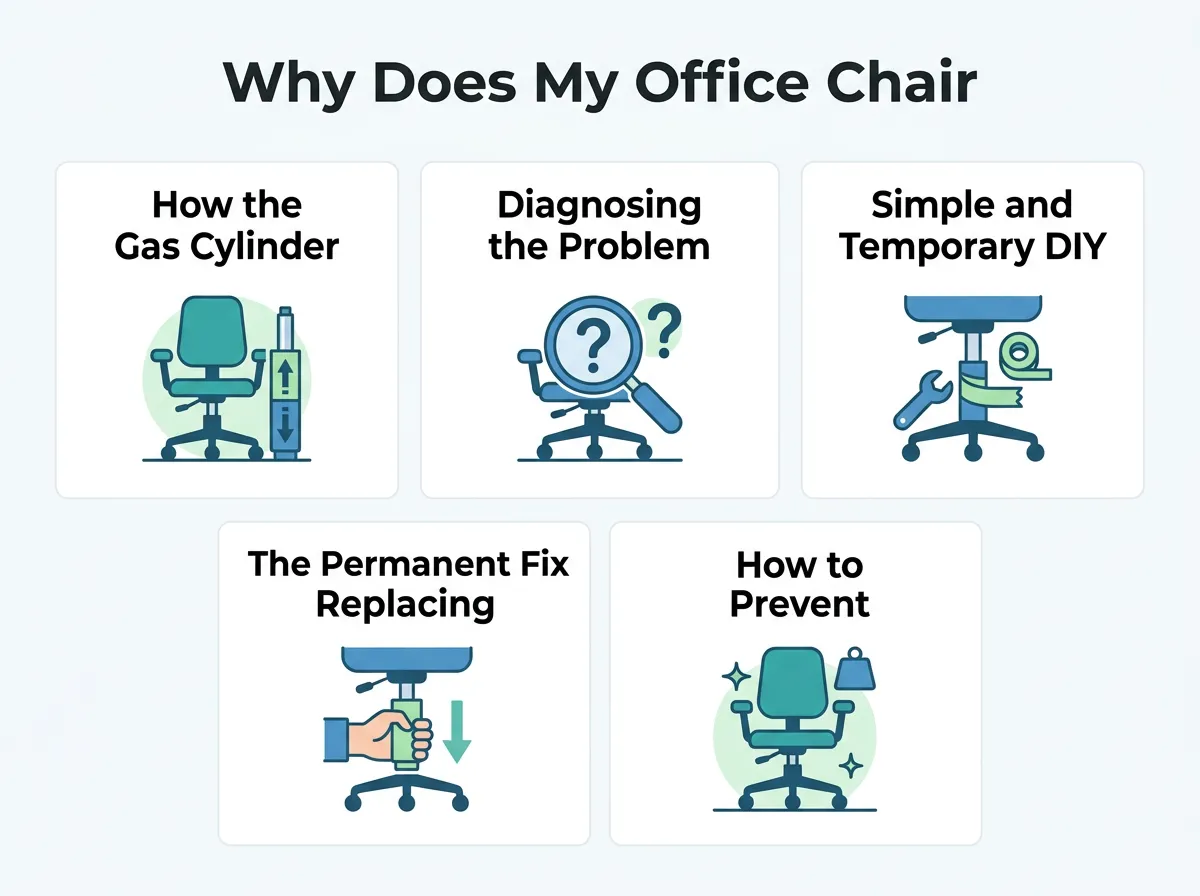
Why Does My Office Chair Keep Sinking? — key points at a glance
Look for Physical Leaks
Sometimes, a failing cylinder will leak a dark oil or greasy residue onto the column of the chair or even onto your carpet. This oil is used to lubricate the moving parts inside the chamber. If you see greasy black marks on the metal shaft under your seat, your seals have failed.
The Slow Descent Test
Sit on your chair and set it to the maximum height. Remain seated while working for about thirty minutes. If you find yourself workably lower without having touched the lever, the pressure is leaking. In online communities, many users share stories about how their desk chair loses pressure and drops down slowly over time, confirming this is a universal frustration.
Simple and Temporary DIY Fixes
If you need a quick fix today and do not want to spend money on new parts right away, there are two classic DIY tricks you can use. Keep in mind that these methods will lock your chair at a fixed height, meaning you will lose the ability to adjust it up or down.
The Hose Clamp Method
This is one of the cheapest and easiest temporary fixes. All you need is a standard hose clamp (also known as a jubilee clip) and some duct tape. You can find these items for just a few dollars at any local hardware store.
First, slide the plastic cover up or off the metal cylinder to expose the metal shaft. Adjust your chair to your ideal working height. Wrap a few layers of duct tape around the very top of the metal cylinder, right where it meets the seat. This tape gives the clamp a textured surface to grip onto.
Next, place the hose clamp over the tape and tighten it as securely as possible using a screwdriver. The clamp acts as a physical barrier, stopping the seat from sliding down into the cylinder.
The PVC Pipe Method
For a slightly sturdier temporary fix, you can use a piece of PVC pipe. This method is incredibly popular because it evenly distributes your weight around the entire shaft, preventing any wobbling.
To do this, measure the diameter of your chair’s metal cylinder shaft. Usually, a 1.5-inch PVC pipe works perfectly. Next, measure the length of the exposed metal shaft when the chair is set to your preferred height.
Cut the PVC pipe to this exact length using a hand saw. Then, cut a straight slit down the length of the pipe so you can snap it open. Slide the PVC sleeve over the metal cylinder shaft. When you sit down, the rigid plastic pipe will physically hold the seat up, completely bypassing the broken gas cylinder.
The Permanent Fix: Replacing the Gas Cylinder
While PVC pipes and hose clamps work in a pinch, they are not elegant solutions. If you want your chair to function like new and retain its height adjustability, you should replace the cylinder. If you are tired of wondering why does my office chair keep sinking, this is the ultimate solution.
Choosing the Right Replacement Part
You do not need to buy a brand-new chair. Replacement gas cylinders are widely available online and usually cost between fifteen and thirty dollars. Most office chairs use a standard, universal class 4 cylinder, which fits almost all major brands.
Steps to Replace the Cylinder
To begin, you will need a pipe wrench, a rubber mallet, and some penetrating oil like WD-40.
First, lay the chair on its side or turn it upside down on a soft surface. Many repair guides suggest how to fix a sinking office chair by turning it upside down to gain the best mechanical leverage. Apply WD-40 to the joints where the cylinder connects to the seat mechanism and the wheelbase. Let it sit for ten minutes to loosen any rust or tight factory seals.
Use your rubber mallet to tap the wheel base away from the bottom of the cylinder. Once the base is off, grab the old cylinder firmly with your pipe wrench. Twist and pull the cylinder until it pops free from the seat assembly. Finally, drop the new cylinder into the wheelbase, place the seat on top, and sit down to press the components firmly together. For a detailed walkthrough, you can consult an online office chair keeps sinking guide to ensure you do not damage your chair frame during the process.
How to Prevent Your New Cylinder from Sinking
Once you have fixed or replaced your cylinder, you will want to make sure it lasts as long as possible. A few simple habits can extend the life of your office chair dramatically.
Respect the Weight Limit
Every office chair has a maximum weight capacity, typically ranging from 250 to 400 pounds. Exceeding this weight limit puts immense pressure on the rubber seals, causing them to fail much sooner. If you need a heavy-duty option, look for chairs rated as “big and tall,” which feature reinforced class 4 cylinders.
Avoid Dropping into Your Seat
When you sit down, try to lower yourself gently rather than flopping or dropping heavily into the chair. Plopping down creates a sudden spike in air pressure inside the chamber. Over time, these repeated pressure spikes blow out the delicate internal seals, causing you to ask once again: why does my office chair keep sinking?
Keep the Shaft Clean
Dust, pet hair, and dirt can stick to the lubricated metal shaft of your chair. When the cylinder compresses, this debris gets pulled inside the chamber, where it can scratch the rubber seals. Wipe down the metal shaft with a clean microfiber cloth once every few months to keep it smooth and debris-free.
Conclusion
Dealing with a sinking chair can ruin your productivity and leave you with a sore back. Fortunately, understanding why does my office chair keep sinking is the first step toward reclaiming your comfort. Whether you choose a quick weekend DIY fix using a hose clamp, or decide to swap out the cylinder for a permanent fix, you do not have to live with a sagging seat. Invest a little bit of time into maintaining your chair, and your back—and your focus—will thank you!
Frequently Asked Questions
Why does my chair sink when I sit on it?
Your chair sinks because the rubber seals inside the pneumatic gas cylinder have worn out or cracked. This allows the pressurized nitrogen gas that holds up your weight to leak out, causing the seat to slide down. Replacing the cylinder is the only permanent solution to this problem.
Can you fix a sinking office chair without replacing the cylinder?
Yes, you can temporarily fix it by clamping a hose clamp or a split PVC pipe around the exposed metal shaft. These physical barriers stop the chair from sliding down, but they will lock your chair at a single height. You will lose the ability to adjust the seat height up or down.
How much does it cost to replace an office chair gas cylinder?
A replacement gas cylinder is very budget-friendly, typically costing between $15 and $30 online. Replacing the cylinder yourself is much cheaper than buying a brand-new ergonomic chair. Most replacement kits also come with the necessary removal tools included.
Are all office chair gas cylinders the same size?
Most modern office chairs use a standard, universal size for their gas cylinders, which is usually a 1.1-inch (28mm) diameter at the top. However, some specialty or high-end chairs might use custom sizes. It is always a good idea to check your chair manual or measure the cylinder before buying a replacement.
What tools do I need to fix a sinking office chair?
To replace a cylinder, you will typically need a pipe wrench, a rubber mallet or hammer, and some penetrating oil like WD-40 to loosen the tight joints. If you are using the temporary hose clamp method, you only need a screwdriver and some duct tape. Always work carefully to avoid scratching the metal parts.
How long should an office chair gas cylinder last?
A standard office chair gas cylinder usually lasts between 5 and 10 years depending on daily usage and weight load. Sitting down gently and keeping the cylinder shaft clean from dust and pet hair can significantly extend its lifespan. If your chair is sinking much sooner, it may be due to exceeding the weight limit.
