


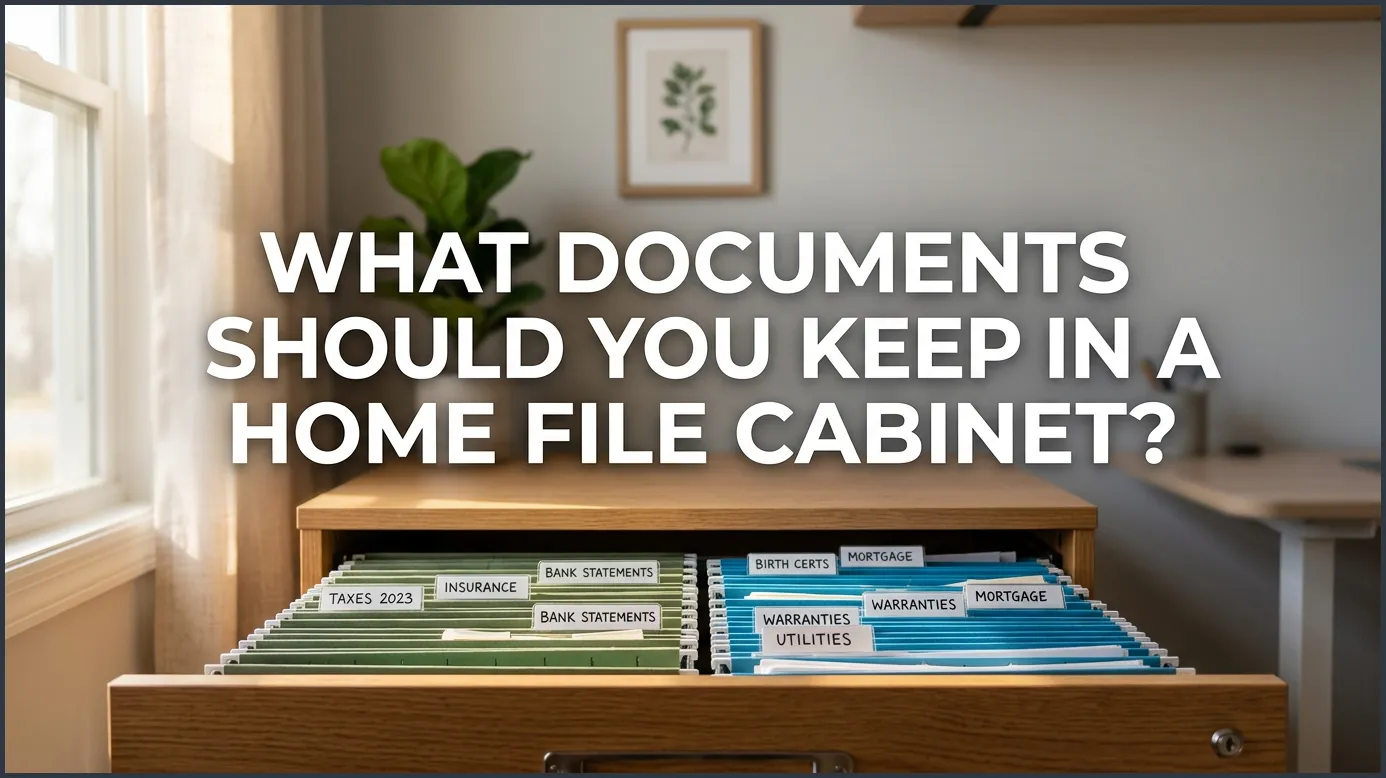
To keep your home secure and clutter-free, you should store vital identity papers, financial records, tax returns, and property deeds in a safe spot. Grouping these papers into permanent, tax, and active folders makes them easy to find in an emergency. A well-kept home filing system protects your family’s history and gives you peace of mind.
Picture this. You are sitting at your kitchen table. You have a cup of warm coffee in your hand. But as you look around, you see piles of paper. There are bills on the counter. There are letters on the fridge. There is a box of old tax papers in the corner. You want to clean up. But you do not know where to start. You might ask yourself, what can I throw away? What do I need to save for later?
It is easy to feel lost in a sea of paper. We get mail every single day. Some of it is junk. Some of it is very important. If you do not have a plan, the piles will grow. You might lose a bill. You might misplace a vital medical record. That is why a good home file cabinet is so helpful. It keeps your life in order.
This guide will help you tame the paper beast. We will walk you through what to keep, what to throw out, and how to set up your files. By the end of this post, you will feel ready to clean your desk and protect your family’s records. Let us dive in!
Key Takeaways
- Keep Forever: Always save vital papers like birth certificates, social security cards, and wills.
- Tax Records: Keep tax returns and supporting receipts for seven years before you shred them.
- Property Files: Keep home deeds, car titles, and loan papers for as long as you own those assets.
- Active Files: Use a separate folder for current bills, medical history, and active warranties.
- Color Coding: Organize your cabinet with color-coded folders to find papers in seconds.
- Safe Storage: Use a fireproof pouch or cabinet to shield your most important records.
📑 Table of Contents
- The Power of a Organized Home Filing System
- What Documents Should You Keep in a Home File Cabinet Forever?
- Financial and Property Records
- Tax Documents: How Long is Long Enough?
- Active Files and Short-Term Papers
- Simple Tips to Organize Your Home File Cabinet
- Conclusion: Peace of Mind is Just a Folder Away
The Power of a Organized Home Filing System
Paper clutter does not just take up space on your desk. It also takes up space in your mind. Every time you see a messy pile, you feel a little bit of stress. You worry that you forgot to pay a bill. You worry that you lost an important form. A simple cabinet can change everything.
Why Paper Still Matters
We live in a digital world. We can pay bills on our phones. We can view bank statements online. But paper is still very important. Some government offices only accept original paper forms. If you lose your power or your internet, you still need to reach your records. Having physical copies of your most vital papers is a smart safety net.
Getting Started with Your Setup
You do not need a giant office to stay organized. A small, two-drawer cabinet can hold all your files. The first step is setting up a home filing system that fits your life. Place your cabinet in a spot that is easy to reach. If it is too hard to get to, you will not use it. You will just leave your papers on the counter again.
Before you buy any folders, think about your space. You can read a helpful guide to filing cabinets to find the best size and style for your room. A metal cabinet is strong. A wood cabinet looks nice. Pick one that makes you happy.
What Documents Should You Keep in a Home File Cabinet Forever?
Some papers are too important to ever throw away. These are your vital records. They prove who you are. They prove your citizenship, your marriage, and your education. If you lose these, it can take months of hard work to get new ones.

What Documents Should You Keep in a Home File Cabinet? — key points at a glance
Vital Identity Papers
Keep these papers in a safe place for your entire life:
- Birth certificates for every family member
- Social Security cards
- Passports and green cards
- Adoption papers
- Marriage licenses and divorce decrees
- Military discharge papers (DD-214)
Estate Planning and Wills
You must also keep your estate plans. These papers tell your family what to do if you get sick or pass away. Keep your original will, living will, and power of attorney documents. Make sure a trusted family member knows where to find them.
Since these papers are so vital, you must protect them from damage. It is a good idea to keep important documents safe by using fireproof folders. Put these folders in a locked drawer. This protects them from fire, water, and nosy guests.
Financial and Property Records
Your home and your cars are some of the biggest purchases you will ever make. You need to keep the papers that prove you own them. If you sell your house or your car, you will need these files right away.
Property Deeds and Titles
Keep your home deed and your mortgage payoff letters. If you own a car, boat, or RV, keep the title in your cabinet. Once you sell the vehicle, you can give the title to the new owner. Until then, keep it locked up.
Loan Documents and Investments
Keep documents for active loans, like student loans or car loans. You should also keep annual statements for your retirement plans and stock investments. You do not need to keep monthly statements. Just keep the year-end summary. It shows the big picture of your wealth.
Tax Documents: How Long is Long Enough?
When you ask, What Documents Should You Keep in a Home File Cabinet? taxes are often the biggest worry. No one wants to get in trouble with the IRS. But you do not need to keep every tax receipt from high school.
The Seven-Year Rule
The general rule for tax papers is seven years. The IRS can audit your tax returns for up to six years if they find a big error. To be safe, keep your tax records for seven years. This includes:
- Your federal and state tax returns
- W-2 and 1099 forms
- Receipts for business expenses
- Records of charity donations
- Medical expense receipts used for tax deductions
What to Keep Long-Term
While you can toss receipts after seven years, you should keep your actual tax returns forever. They do not take up much space. It is nice to have a record of your lifetime earnings if you ever need to check your Social Security benefits.
Active Files and Short-Term Papers
Not everything in your cabinet needs to stay there forever. Some papers are only useful for a few months or a year. We call these active files. It is smart to keep these in a separate drawer so they do not mix with your permanent papers.
Medical Records and Bills
Keep your family’s health history in one place. This includes immunization records, lists of medications, and health insurance policies. You should also keep medical bills until they are paid in full. Once the bill is paid and matches your insurance statement, you can shred it.
Utility Bills and Warranties
Do you keep every power bill? You do not need to. Keep utility bills for just one year. This helps you track your energy use. After twelve months, toss them. For home appliances, keep the manual and the warranty. Once the warranty expires, or if you sell the appliance, you can throw the manual away.
Simple Tips to Organize Your Home File Cabinet
Now you know what documents should you keep in a home file cabinet to stay safe and organized. But how do you keep it neat? A messy cabinet is just as bad as a messy desk. Here are some simple steps to make your cabinet easy to use.
Use Color-Coded Folders
Color makes our brains happy. It also helps us find things fast. Try using different colors for different parts of your life. For example:
- Green for money, bank statements, and tax files
- Blue for medical records and health insurance
- Red for vital papers like birth certificates
- Yellow for home utility bills and car repairs
Label Everything Clearly
Do not write labels by hand if you can avoid it. Use a label maker or print neat labels. Keep the names simple. Use labels like “Car Insurance,” “Water Bill,” or “Taxes 2023.” Place the folders in alphabetical order so you do not have to search.
The One-In, One-Out Rule
To keep your cabinet from getting too full, use the one-in, one-out rule. When you put a new car insurance policy in the folder, take the old one out and shred it. This keeps your files fresh and saves space.
Conclusion: Peace of Mind is Just a Folder Away
Organizing your paperwork might seem like a chore. It takes some time to sort through the piles. But once you finish, you will feel a great sense of relief. You will know exactly where your birth certificate is. You will know that your taxes are safe. Best of all, your kitchen counter will be clean.
Take it one step at a time. Spend just fifteen minutes a day sorting your papers. Before you know it, your home file cabinet will be the most organized spot in your house. You will have a clear home and a clear mind!
Frequently Asked Questions
How long should I keep utility bills in my file cabinet?
You should keep utility bills for one year. This allows you to compare your monthly usage over a full annual cycle. Once you have the new year’s bills, you can safely shred the old ones.
Can I scan my documents instead of keeping physical copies?
Yes, scanning documents to a secure cloud drive is a great way to save space. However, you must keep original paper copies of vital papers like birth certificates, wills, and property deeds. Many official agencies will not accept digital copies of these specific items.
Where is the safest place to keep my home file cabinet?
Place your cabinet in a dry, cool room of your home, away from areas prone to flooding like basements. For maximum safety, use a fireproof cabinet or store your most vital papers in a fireproof lockbox inside the cabinet.
What should I do with old financial papers when I throw them away?
Always shred old financial papers instead of tossing them in the regular trash. Documents like bank statements, credit card bills, and tax forms contain private details. Shredding them helps protect your identity from theft.
How long should I keep home improvement receipts?
Keep receipts for home improvements for as long as you own the home. When you eventually sell your house, these receipts can help reduce the capital gains tax you might owe by proving you improved the property’s value.
Do I need to keep receipts for everyday purchases?
No, you do not need to keep everyday receipts. Only keep receipts for expensive items under warranty, tax-deductible purchases, or items you might need to return to the store soon.
