



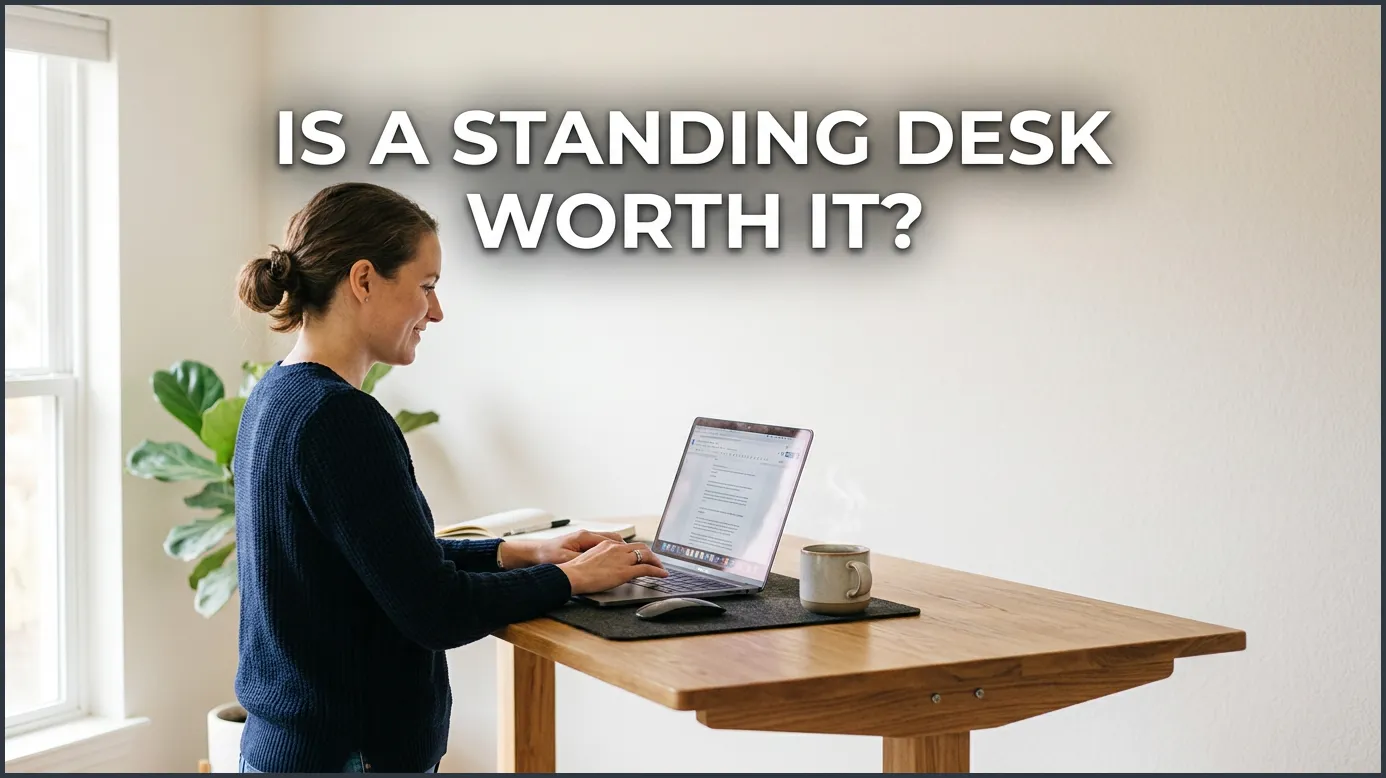
Yes, a standing desk is highly worth the investment if you want to reduce back pain, boost your daily energy, and avoid the health risks of sitting too long. However, its value relies entirely on your willingness to build a consistent habit of alternating between sitting and standing. To get the best results, you must use proper posture and ease into standing slowly to avoid fatigue.
Imagine this common scenario. It is three in the afternoon. Your shoulders are tight, your lower back aches, and your eyes are heavy. You are on your third cup of coffee, but your brain still feels slow. Many of us spend over eight hours a day glued to an office chair. It is no wonder we feel drained and stiff by the time the evening rolls around.
This daily struggle is why active office furniture has become so popular. Walk into any modern office today, and you will see people raising and lowering their workspaces with the push of a button. But these desks are not cheap. A good model can cost a few hundred dollars. This leaves many remote workers and professionals asking: Is a standing desk worth it?
In this guide, we will look at the real pros and cons of making the switch. We will explore what the science says, cover the true costs, and share easy tips to help you decide. By the end, you will know if this workspace upgrade fits your budget and your daily lifestyle.
Key Takeaways
- Eases Chronic Pain: Standing during the workday can significantly reduce strain on your lower back, neck, and shoulders.
- Boosts Energy and Focus: Alternating your posture keeps your blood flowing, which helps fight off afternoon brain fog.
- Requires a Transition: You must build up your standing time gradually to prevent foot and leg fatigue.
- Dynamic Use is Key: The real magic happens when you alternate between sitting and standing, rather than standing all day.
- Accessories Help: Pairing your new desk with a high-quality anti-fatigue mat makes a massive difference in comfort.
📑 Table of Contents
The Health Benefits: What Does the Science Say?
We often hear that sitting too long is bad for our bodies. But does standing up at work actually fix these problems? Research shows that changing your posture during the day has real health perks.
Relieving Chronic Back and Neck Pain
Most office workers suffer from back pain. Sitting puts a lot of pressure on your spine. When you stand, you naturally align your spine and take the pressure off your lower back. Many people notice a big drop in neck and back pain after just a few weeks of using an adjustable desk. There are several 7 health benefits of a standing desk that help improve your daily physical comfort and spinal health.
Boosting Energy Levels and Moods
Standing up gets your blood moving. When your blood flows better, more oxygen reaches your brain. This helps you feel more awake and focused. Many users say they feel less tired in the afternoon when they stand for part of the day. It is a simple way to beat the mid-day slump without drinking more caffeine.
Lowering Blood Sugar Spikes
Sitting right after you eat can lead to high blood sugar spikes. High blood sugar is bad for your health over time. Standing up after lunch can help your body process food better. It keeps your blood sugar levels more stable. This small habit can make a big difference for your long-term wellness.
The Real-World Pros of Using a Standing Desk
Aside from health perks, how does this tool change your workday? Many users find that it changes the way they work for the better.
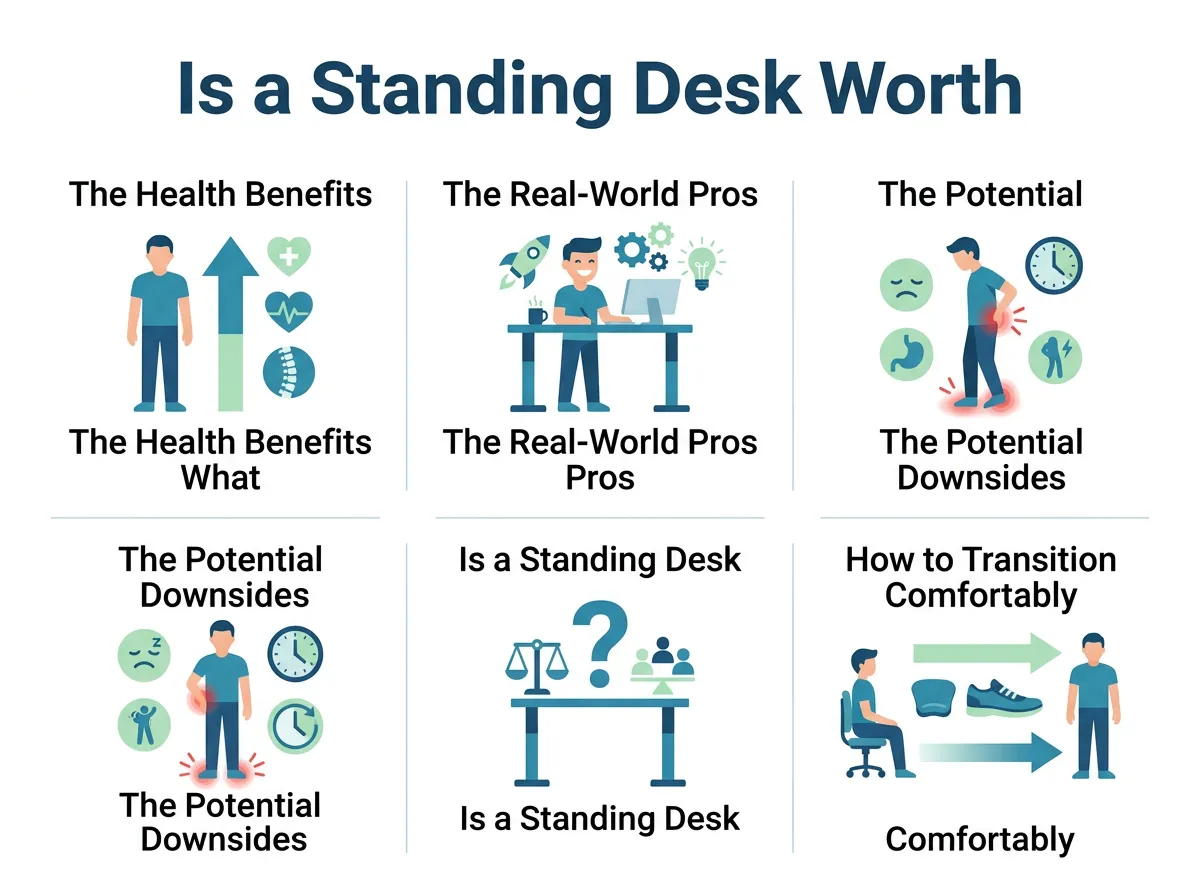
Is a Standing Desk Worth It? — key points at a glance
Increased Focus and Daily Productivity
It is easy to get lazy when you are slumped in a comfy chair. Standing up puts your body in an active state. This state helps you stay alert. You might find that you finish tasks faster when you are on your feet. It is a great way to tackle hard projects that require a lot of focus.
Better Posture and Core Strength
When you sit, you tend to slouch forward toward your screen. This strains your neck. Standing forces you to use your core muscles to stay upright. Over time, this builds strength in your back and stomach. You will find yourself standing taller even when you are not at your office desk.
More Natural Movement Throughout the Day
When you stand, you do not just stay still. You pace, stretch, and shift your weight from foot to foot. These tiny movements add up. They help you burn a few extra calories and keep your joints loose. If you want to know are standing desks worth the hype, the answer lies in how much extra movement they bring to a boring workday.
The Potential Downsides to Consider
While the perks are great, these desks are not perfect for everyone. It is important to look at the challenges before you buy one.
The Risk of Standing Too Much
Too much of a good thing can cause problems. Standing for eight hours straight is just as bad as sitting all day. It can cause leg cramps, sore feet, and even varicose veins. The key is balance. You must switch between sitting and standing to get the best results.
The Adjustment Period for Your Feet
Your body is not used to standing for long hours. When you first get your desk, your feet and calves might feel sore. This is normal, but it can be annoying. You have to give your body a few weeks to adjust to the new routine.
Higher Price Tags Compared to Standard Desks
A basic flat desk is very cheap. An adjustable desk with a motor costs much more. You are paying for the motor, the frame, and the technology. If you are on a tight budget, this cost can feel like a lot of money upfront.
Is a Standing Desk Worth It for Your Specific Setup?
To decide if this purchase makes sense, you should look at your personal work habits.
The Remote Worker and Freelancer
If you work from home, you have full control over your space. A sit-stand desk is a great investment here. You can stand during phone calls and sit during quiet writing time. If you want to build an active routine, pairing your desk with a walking pad and standing desk setup is a fantastic way to get your steps in while you work.
The Active Office Enthusiast
Do you already like to stretch and move? If yes, you will love an adjustable desk. It fits right into an active lifestyle. You will find it easy to make standing a natural part of your day.
When It Might Not Be Worth It
If you prefer to sit all the time, you might not use the standing feature. In that case, the desk will just sit at one height forever. If you have joint pain in your knees or ankles, standing might make it worse. Be sure to think about your health needs before you spend the cash.
How to Transition Comfortably: Crucial Tips for Beginners
If you decide to buy one, do not start standing all day right away. Use these tips to make the transition easy and pain-free.
Use the 50/50 Rule
Start by standing for just 20 minutes out of every hour. Sit for the other 40 minutes. Slowly build up your time as your legs get stronger. A good goal is to split your day evenly between sitting and standing.
Invest in an Anti-Fatigue Mat
Do not stand on a hard floor in bare feet or flat shoes. A thick, squishy anti-fatigue mat is a lifesaver. It cushions your feet and keeps your legs from getting tired too quickly. It is worth every penny.
Set the Correct Desk Height
Your elbows should rest at a 90-degree angle when typing. Your eyes should look straight ahead at the top third of your screen. If your desk is too high or too low, you will strain your neck and wrists.
Conclusion: Making the Final Decision
So, is a standing desk worth it? For most people who work at a computer, the answer is a clear yes. The boost in energy, the relief from back pain, and the freedom to move make it a great tool. While the upfront cost is higher than a standard desk, the benefits to your long-term health and productivity are well worth the price. Just remember to start slow, wear comfortable shoes, and keep moving!
Frequently Asked Questions
How long should I stand at a standing desk each day?
You should aim to stand for about 15 to 30 minutes of every hour when you first start. Over time, you can work your way up to an equal split of 4 hours of sitting and 4 hours of standing across an 8-hour workday. Never try to stand all day, as this can cause foot and joint fatigue.
Does using a standing desk help you lose weight?
Standing burns slightly more calories than sitting, but the difference is modest. You will burn about 8 to 10 extra calories per hour just by standing instead of sitting. To see real weight loss benefits, you should pair your desk with light movements like stretching or walking on an under-desk treadmill.
Do I need to wear special shoes when standing at my desk?
Yes, supportive shoes with good arch support are highly recommended. Avoid flat shoes, high heels, or standing completely barefoot on hard floors for long periods. If you prefer to work without shoes, be sure to use a high-quality anti-fatigue mat to cushion your feet.
What is the correct height for a standing desk?
Your desk should be set at a height where your elbows are bent at a 90-degree angle while typing on your keyboard. Your wrists should remain flat and neutral, not angled up or down. Additionally, the top of your computer monitor should be right at eye level so you do not have to tilt your head down.
Can a standing desk actually reduce back pain?
Yes, many users experience a significant reduction in lower back pain after switching to a sit-stand desk. Standing helps realign your spine and relieves the constant compressive pressure that sitting puts on your lower back. However, you must maintain good posture while standing to feel these benefits.
Should I buy a manual or an electric standing desk?
An electric standing desk is usually worth the extra cost because it allows you to change heights with the press of a button. Manual desks require you to turn a hand crank, which can be slow and tiring. If adjusting the desk is difficult, you are much less likely to use the standing feature regularly.
