



To keep your body healthy and energized, aim to switch between sitting and standing every 30 to 45 minutes. A popular and effective guideline is the 20-8-2 formula, which suggests sitting for 20 minutes, standing for 8 minutes, and moving for 2 minutes. Finding your personal comfort zone while keeping active is the ultimate key to avoiding physical fatigue.
Imagine you just set up your brand-new height-adjustable desk. You feel excited to boost your energy, improve your posture, and leave behind that annoying afternoon fatigue. You stand up, raise your desk, and promise to never slouch in an office chair again. But after a few hours of standing, your feet throb. Your lower back aches. You find yourself desperately wanting to sit down. You begin to wonder if standing is really all it is cracked up to be.
This common scenario shows that simply replacing sitting with standing is not the answer. The real trick to staying healthy and productive is balance. We need a dynamic approach that keeps our bodies in motion. But how often should you switch between sitting and standing?
In this guide, we will break down the science of active working. We will look at perfect timing ratios, explore simple daily routines, and give you practical tips to stay comfortable. Let’s find the sweet spot that works best for your body.
Key Takeaways
- The Golden Ratio: Aim for a sit-to-stand ratio of 2:1 or 3:1, meaning more sitting time than standing time overall.
- Avoid Extremes: Standing all day can cause leg strain and fatigue, while sitting all day weakens your core.
- The 20-8-2 Rule: This simple framework of sitting, standing, and moving keeps your blood flowing and body active.
- Listen to Your Body: Shift your posture before you start feeling pain, tightness, or fatigue.
- Add Gentle Movement: True wellness comes from moving, walking, and stretching throughout your workday.
- Invest in Gear: Supportive shoes and anti-fatigue mats make standing much easier on your joints.
📑 Table of Contents
Why Both Extremes Can Harm Your Body
We often hear that sitting too long is bad for our health. It can slow our metabolism, weaken our core muscles, and increase health risks. However, standing all day is not a perfect solution either. When you stand for hours without a break, you place a lot of stress on your circulatory system, joints, and feet.
The Dangers of Sitting Too Long
When you stay glued to your office chair, your muscles go quiet. Your calorie burn drops to a minimum, and blood flow slows down in your legs. Over time, this inactivity can lead to tight hips, a weak back, and poor posture. Your body was designed to move, and sitting freezes you in one stiff shape. This lack of movement also leads to afternoon fatigue and brain fog.
The Risks of Standing Too Long
On the flip side, prolonged standing has its own set of problems. It can lead to blood pooling in your lower legs, which might cause varicose veins. It also puts constant pressure on your knees, hips, and lower back. Research from authorities like the Georgetown University School of Nursing shows that both sitting and standing for too long carry health risks. The goal should be regular movement, not swapping one static pose for another.
Finding Your Golden Sit-Stand Ratio
There is no single rule that works for everyone, but experts have found some excellent guidelines. For most people, the key is to aim for a sit-to-stand ratio of about 2:1 or 3:1. This means for every hour or two you sit, you should spend some time standing up.
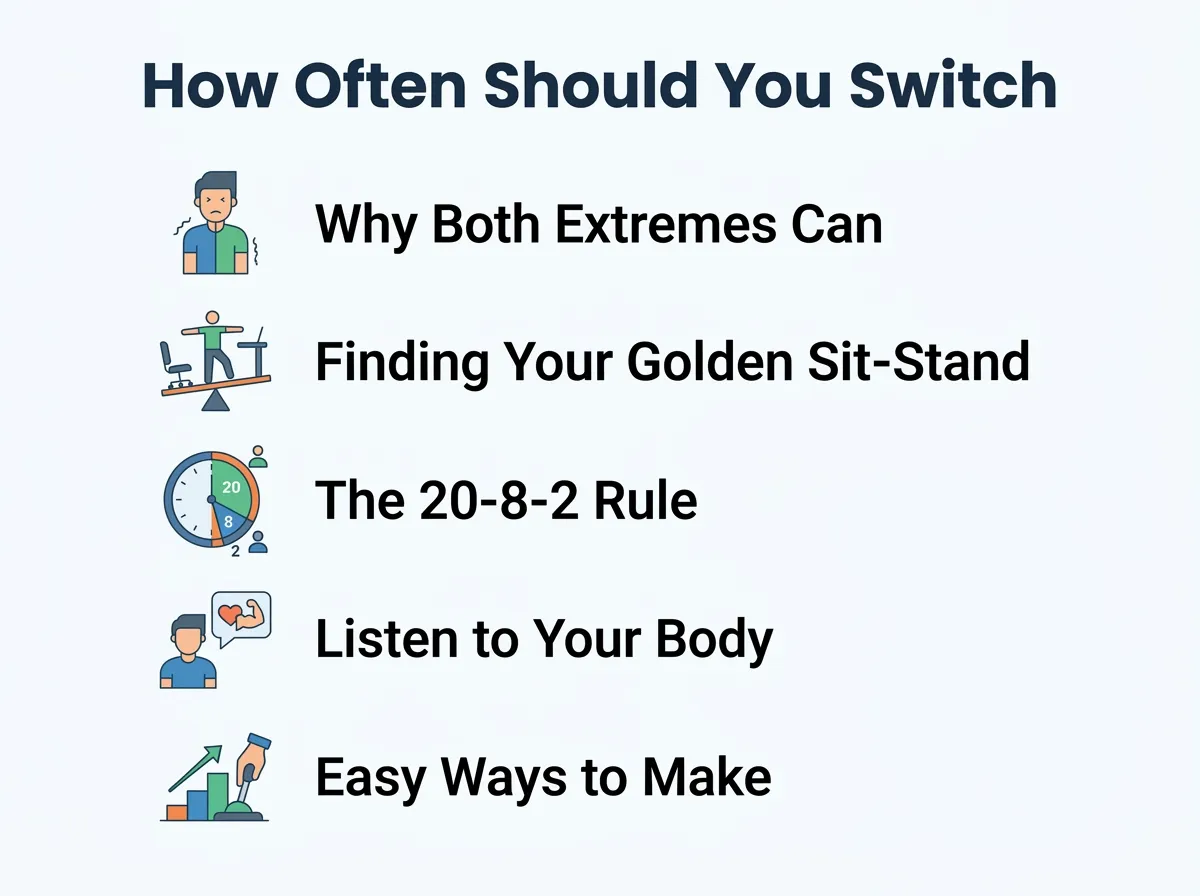
How Often Should You Switch Between Sitting and Standing? — key points at a glance
The Ideal Timing for Beginners
If you are new to using an adjustable desk, do not push yourself too hard. Start slow. A great starting point is to sit for 45 minutes, then stand for 15 minutes. This gentle rhythm helps your muscles and joints adapt to the new pattern without causing fatigue. You can learn more about how to pace your standing sessions in this detailed guide on how long to stand at a standing desk.
The Target Ratio for Experienced Users
As your body grows stronger, you can adjust your balance. Many ergonomic experts recommend standing for 20 to 30 minutes out of every hour. This keeps your energy levels high and prevents your muscles from stiffening up. Remember, the goal is to avoid staying in any single position for more than an hour at a time.
The 20-8-2 Rule: A Proven Formula for Success
If you want a clear and easy plan to follow, the 20-8-2 rule is a fantastic tool. Created by Cornell University ergonomics professor Alan Hedge, this formula offers a simple schedule to guide your workday transitions.
How the Rule Breaks Down
The 20-8-2 rule divides a 30-minute block of work into three simple steps:
- Sit for 20 minutes: Use this time for highly focused work, typing, or reading.
- Stand for 8 minutes: Raise your desk and stand while you continue your tasks, like answering emails or taking calls.
- Move for 2 minutes: Walk around, stretch your arms, or grab a glass of water.
Why This Rule Works So Well
By breaking your day into these short, manageable intervals, you keep your body in a constant state of gentle transition. This keeps your blood flowing and prevents your muscles from locking up. It also gives your eyes a break from the screen and helps maintain high focus levels. For a deeper look at how to implement this system, check out this breakdown of the 20-8-2 standing desk rule.
Listen to Your Body: Signals to Change Positions
While rules and timers are helpful, your body is always the best guide. It will send you quiet physical and mental signals when it is time to switch things up. Learning to recognize these signs can save you from aches and stiffness.
Physical Cues to Watch For
If you feel a dull ache in your lower back, or if you start shifting your weight from one foot to another, your body is telling you to sit down. On the other hand, if you feel your shoulders creeping up to your ears or your lower back rounding while sitting, it is time to stand up and stretch.
Mental Fatigue and Brain Fog
Your mind and body are closely connected. If you find yourself reading the same sentence three times without understanding it, you might just need a change of posture. Standing up boosts blood flow to the brain, which can instantly clear away mental fog and restore your focus.
Easy Ways to Make the Switch Part of Your Routine
Remembering to change your desk height can be tricky when you are busy. Here are a few practical tips to make these transitions a natural part of your workday.
Pair Transitions with Everyday Tasks
Instead of relying purely on timers, tie your posture changes to your regular work activities. For example, stand up every time you join a virtual meeting or answer a phone call. Sit down when you need to write a detailed report or analyze complex data. This makes switching positions feel natural rather than like a chore.
Set Up Your Workspace for Comfort
To make standing comfortable, your environment needs to support you. Wear supportive shoes with good cushioning. You should also use an anti-fatigue mat to take the pressure off your heels and knees. Keep your keyboard and mouse at a height where your elbows can rest comfortably at a 90-degree angle.
Use Digital Reminders
If you tend to lose track of time, let technology help you. Set a gentle alarm on your phone, use a smart calendar reminder, or install a free desktop app that prompts you to stretch. Over time, these prompts will help you build a healthy habit that requires no extra thought.
Conclusion
Finding the right balance between sitting and standing is a personal journey. There is no need to stand for hours until your feet ache, nor should you remain glued to your chair all day. By adopting a flexible routine—like switching positions every 30 to 45 minutes or practicing the 20-8-2 rule—you can enjoy the best of both worlds. Listen to your body, move often, and make your desk work for you, not against you!
Frequently Asked Questions
Is it bad to stand all day at a desk?
Yes, standing all day can be just as harmful as sitting all day. It puts excessive pressure on your knees, ankles, and lower back, and can lead to issues like varicose veins. The key to staying healthy is changing your position regularly throughout the day.
What is the 20-8-2 rule?
The 20-8-2 rule is an ergonomic formula that suggests sitting for 20 minutes, standing for 8 minutes, and moving or stretching for 2 minutes. This routine ensures continuous movement and blood flow. It is a highly recommended schedule for adjustable desk users.
Can switching between sitting and standing help with weight loss?
Standing burns slightly more calories than sitting, but the real benefit comes from the regular movement. Incorporating standing and walking into your day keeps your metabolism active. This active routine is much better for weight management than sitting still.
Should I use an anti-fatigue mat?
Yes, an anti-fatigue mat is highly recommended if you stand on hard surfaces. It provides cushioning that reduces the impact on your heels, knees, and lower back. This simple tool can make standing sessions significantly more comfortable.
How long does it take to get used to a standing desk?
It typically takes about two to four weeks for your muscles and joints to adapt to a standing desk. It is best to start with short standing sessions of 10 to 15 minutes and gradually increase your standing time as your stamina builds.
What is the ideal sitting to standing ratio?
Most ergonomic experts suggest a sit-to-stand ratio between 2:1 and 3:1. This means you should aim to stand for about 15 to 20 minutes for every 45 minutes of sitting. This balance offers the best health benefits without causing muscle strain.
