



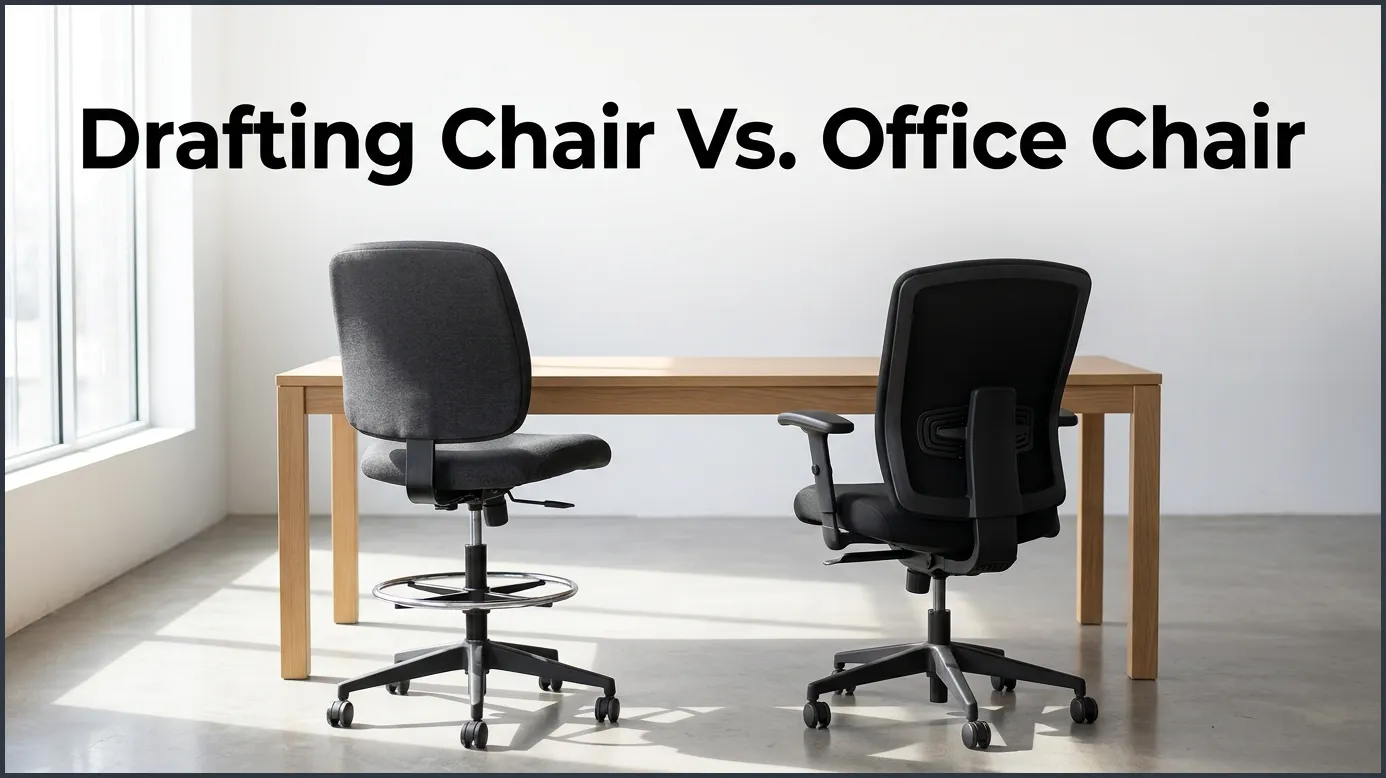
Choosing between a drafting chair and an office chair depends entirely on your desk height and daily work habits. Drafting chairs are built tall with foot rings for elevated workspaces, while standard office chairs offer deep ergonomic support for traditional desks. Selecting the right one will save your back and boost your daily productivity.
Picture this. You walk into your workspace ready to tackle the day. You sit down, pull up to your desk, and start typing. But within an hour, your shoulders feel tight, and your lower back starts to ache. You realize your chair just does not match your desk. The height is off, your feet are dangling, and you cannot find a comfortable position.
Choosing the right seat is about more than just style. It directly affects your health, focus, and daily energy levels. Many people do not realize that office chairs are built for very specific desk types. If you use a high desk or a standing desk, a standard chair will leave you reaching upward. On the other hand, using a tall chair at a low desk can cramp your legs and hurt your posture.
In this guide, we will dive deep into the comparison of Drafting Chair vs. Office Chair. We will explore how they differ in height, foot support, and lumbar care. By the end, you will know exactly which option fits your desk and your daily work routine.
Key Takeaways
- Seat Height: Drafting chairs are significantly taller and built for high desks, while office chairs fit standard 30-inch desks.
- Foot Support: Drafting chairs feature a built-in metal foot ring to support your legs, whereas office chairs let your feet rest flat on the floor.
- Task Flexibility: Drafting chairs allow you to easily switch between sitting and standing, making them perfect for standing desks.
- Ergonomic Focus: Standard office chairs often provide deeper lumbar support and more adjustment options for long-term sitting.
- Workspace Type: Artists, architects, and standing-desk users benefit from drafting chairs, while traditional desk workers prefer office chairs.
- Mobility: Office chairs offer stable rolling on wheels, while tall drafting chairs sometimes use glides for safety at higher elevations.
📑 Table of Contents
What is an Office Chair?
An office chair is the classic seat you see in most work cabins and home offices. It is designed for standard desks that sit about 30 inches off the ground. These chairs focus on keeping you comfortable during long, continuous hours of computer work.
Key Features of Office Chairs
Standard office chairs usually have a seat height range of 16 to 21 inches. This range allows your feet to rest flat on the floor while your knees form a neat 90-degree angle. They often come with thick seat cushions, adjustable armrests, and tilting backrests. To find top-tier ergonomic designs, you can explore the premium collections at Herman Miller office chairs and stools, which show how advanced these seats can get.
Best Uses for Office Chairs
These chairs are perfect for standard writing desks, computer setups, and conference rooms. If you sit for six to eight hours a day without moving much, a traditional office chair provides the stable, cushioned base you need. It supports your thighs, hips, and spine during long typing sessions.
What is a Drafting Chair?
A drafting chair is a taller cousin of the standard office chair. Historically, draftsmen, architects, and artists used them at high, slanted drawing tables. Today, they are popular among people who use standing desks or high kitchen islands. To learn more about their history, you can read about the difference between a drafting chair and an office chair and how they evolved over the years.
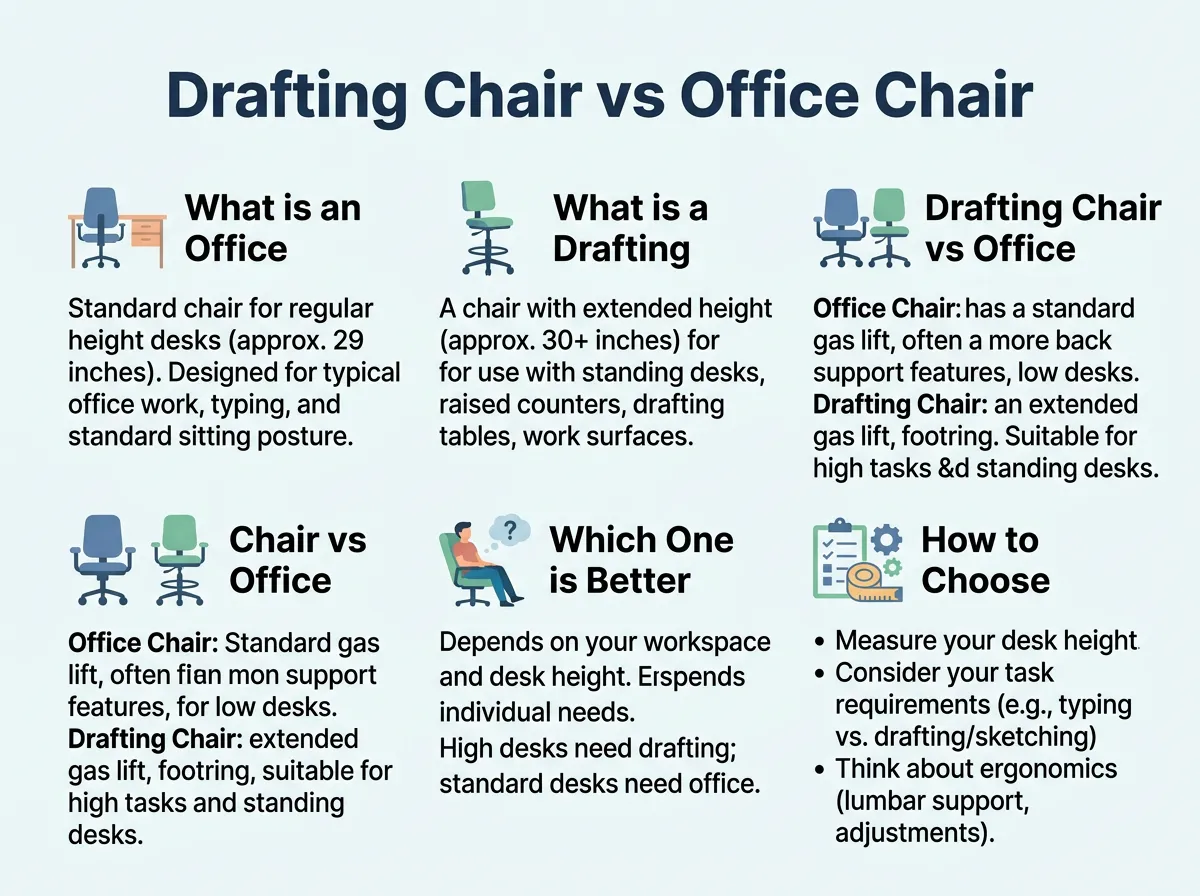
Drafting Chair vs. Office Chair — key points at a glance
Key Features of Drafting Chairs
The most obvious feature of a drafting chair is its height. These chairs can rise from 24 to 34 inches, which is much higher than standard chairs. Because your feet cannot reach the ground at this height, they always feature a built-in metal foot ring. This ring acts as a platform for your feet, keeping your legs from dangling and losing blood flow.
Best Uses for Drafting Chairs
These chairs shine in creative studios, labs, and modern standing-desk setups. They let you sit at eye level with people who are standing. This makes them great for collaborative workspaces, retail counters, and medical offices. They are also ideal if you like to switch between sitting and standing throughout the day without lowering your desk.
Drafting Chair vs. Office Chair: The Main Differences
Let us break down the key differences so you can compare these two seating options side by side.
Height Range and Adjustment
Height is the biggest dividing line. Office chairs are low to the medium range. They work best with desks that are 28 to 30 inches high. Drafting chairs are tall. They are made for surfaces that are 35 to 44 inches high. If you try to use a drafting chair at a normal desk, your knees will hit the drawer under the desktop.
Foot Support and Comfort
When you sit in a standard office chair, your feet must touch the floor. This posture distributes your weight evenly across your hips. In contrast, a drafting chair relies on a circular foot ring. This footrest is adjustable on most models. It helps you keep your knees bent comfortably even when you are sitting high up. If you want to find the perfect fit, you should learn how to choose the best drafting chairs with adjustable footrings and back support.
Ergonomics and Lumbar Support
Office chairs generally win when it comes to deep lumbar support and adjustment features. They often have seat sliders, complex tilt tensions, and multi-directional armrests. Drafting chairs are more compact. They focus on pelvic stability and quick movement. Their backrests are often smaller to allow your arms to move freely while sketching or drawing.
Which One is Better for Your Back?
Back pain is a common complaint for anyone who sits for a living. Choosing between a Drafting Chair vs. Office Chair can actually affect your spine health in different ways.
Back Pain and Sitting Habits
If you struggle with lower back strain, a standard office chair offers more specialized lumbar support. It helps maintain the natural curve of your lower spine. However, if you use a standing desk, a drafting chair can be a lifesaver. It allows you to transition to a high perch without lowering your desk. This movement can relieve pressure on your lower back. For more details on this balance, check out this guide on standing desk chairs for back pain relief to see how height affects your spine.
Active Seating vs. Deep Comfort
Drafting chairs encourage what experts call active sitting. Because you are higher up, you tend to engage your core muscles more to stay balanced. Standard office chairs lean more toward deep, relaxed comfort. They let you sink back and rest your spine against a tall backrest. If you have chronic disc issues, the deep support of a standard office chair is usually safer.
How to Choose the Perfect Chair for Your Workspace
Still not sure which one to buy? Let us look at a few practical examples to help you make your final choice.
Assess Your Desk Height
First, grab a tape measure. Measure from the floor to the top of your desk surface.
- If your desk is 28 to 30 inches tall, buy an office chair.
- If your desk is 35 to 44 inches tall, buy a drafting chair.
- If you have an adjustable standing desk and want to sit at high levels, buy a drafting chair.
Think About Your Daily Tasks
Are you a software developer who types for eight hours straight? If so, you need the heavy lumbar support of an office chair. Do you run a retail shop, work in a lab, or paint on tall canvases? In those cases, a drafting chair gives you the height and quick mobility you need to do your job well.
Common Mistakes to Avoid When Buying
Buying a workspace chair is an investment in your health. To get the most value, make sure to avoid these common slip-ups.
Ignoring the Armrest Height
Many drafting chairs have fixed armrests that might strike the edge of your high desk. Look for chairs with flip-up arms or height-adjustable armrests. This ensures you can roll close to your workspace without blocking your arms.
Forgetting About Wheel Casters
Tall chairs can slide away easily when you try to sit down. This can be dangerous. If you buy a tall drafting chair, look for models with hooded glides or weight-activated brakes. These features lock the wheels when you sit, keeping you safe and steady.
Conclusion
In the battle of Drafting Chair vs. Office Chair, there is no single winner. The best chair is the one that fits your desk height and supports your body. Standard office chairs are perfect for classic desks and long hours of computer work. They give your spine deep, cozy support. Drafting chairs are the champions of high-desk workspaces, creative studios, and active standing setups.
Take a close look at your desk, measure its height, and think about how you like to move during the day. By choosing the right tool for the job, you will protect your back, boost your energy, and enjoy a much more comfortable workday.
Frequently Asked Questions
Can you use a drafting chair at a normal desk?
No, standard desks are too low for drafting chairs. Even at their lowest height setting, drafting chairs are usually too tall, meaning your knees will hit the underside of the desk. It is best to use a standard office chair for desks that are 30 inches tall.
Do drafting chairs have lower back support?
Yes, many high-quality drafting chairs come with built-in lumbar support. However, because they are designed for active sitting and movement, their backrests are often smaller and offer fewer adjustment settings than standard ergonomic office chairs.
Why do drafting chairs have a foot ring?
The foot ring provides a stable place to rest your feet since drafting chairs sit high off the ground. Without it, your legs would dangle, which cuts off healthy blood circulation and puts extra strain on your thighs and lower back.
Can I remove the foot ring from a drafting chair?
Most drafting chairs allow you to adjust the height of the foot ring, and some even let you remove it completely. However, removing it is not recommended unless you are short enough to rest your feet flat on the floor or a separate footrest.
Are drafting chairs comfortable for long hours?
They can be highly comfortable if you use them with a tall desk and utilize the foot ring. However, for continuous eight-hour sitting sessions, a traditional ergonomic office chair generally provides better deep cushioning and spinal support.
Which chair is better for a standing desk?
A drafting chair is the better option for a standing desk. It allows you to quickly sit down at a high level without needing to lower your desk every time you want to rest your legs.
