



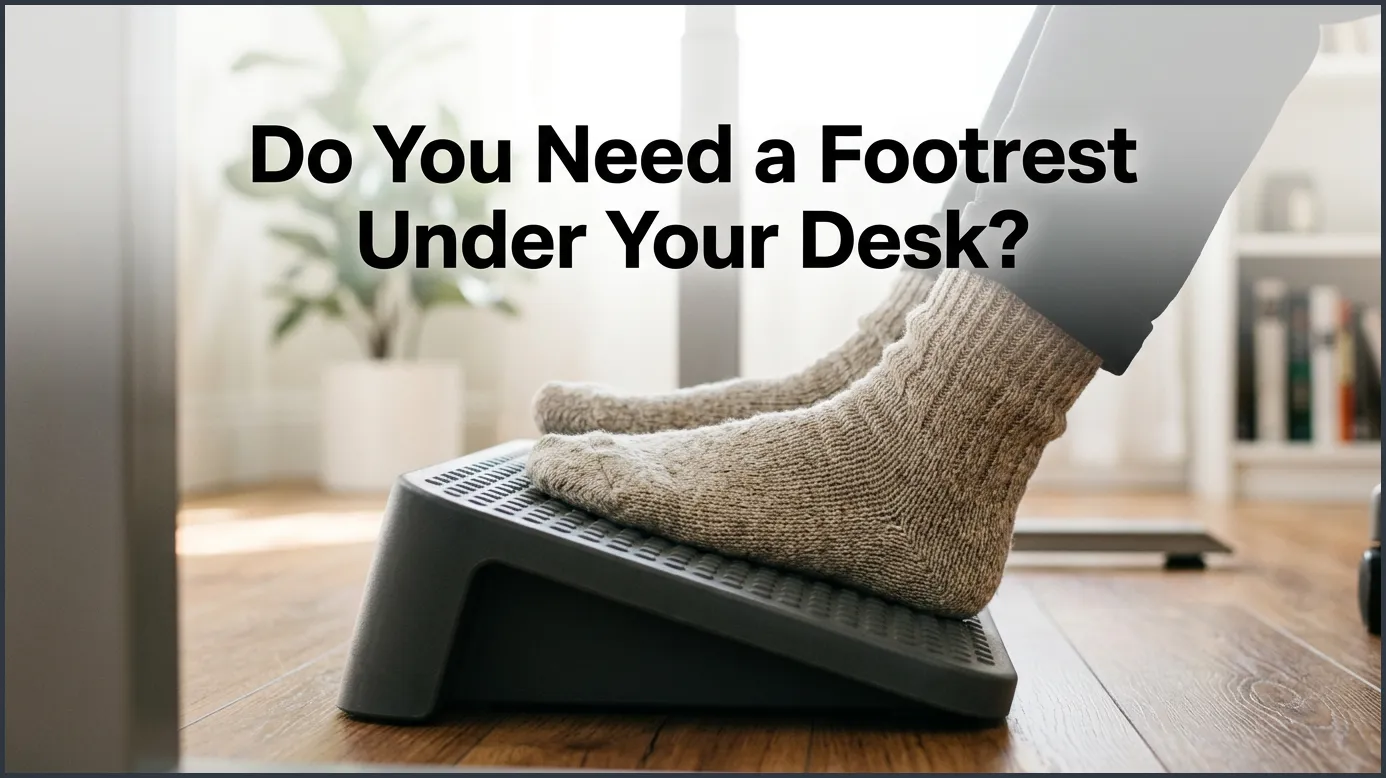
If your feet do not rest flat on the floor while sitting at your workspace, you absolutely need a footrest under your desk. This simple ergonomic tool aligns your hips, relieves lower back strain, and boosts healthy blood flow during long workdays. Investing in a high-quality footrest is a quick, highly effective way to upgrade your comfort and productivity.
Imagine you are sitting at your computer. You want to focus on your work. But after just one hour, your lower back hurts. Your thighs feel tight. Your legs feel heavy and tired. You shift in your seat. You cross your legs, then you uncross them. You try to slouch, then you try to sit up straight. Nothing feels good for more than a few minutes. This daily struggle is very common for desk workers.
We often blame our chairs or our screens for this discomfort. We buy expensive chairs and hope for the best. But we rarely look down at our feet. The way your feet touch the ground changes your entire posture. It affects your spine, your hips, and your blood flow. If your feet are not in the right spot, your whole body pays the price.
We often ignore the space under our desks. Yet, a tiny change under your feet can make a massive difference. In this article, we will look at how you sit. We will help you decide if it is time to add this simple tool to your setup. You will learn the signs that you need one, the health benefits, and how to pick the best style for your workspace.
Key Takeaways
- Improved Posture: A footrest helps align your hips and spine, keeping you upright and comfortable.
- Better Circulation: Elevating your feet prevents blood pooling in your legs and reduces fatigue.
- Reduced Back Pain: It takes the pressure off your lower back and thighs by distributing your weight evenly.
- Short-Stature Solution: It is essential for shorter individuals whose feet cannot reach the floor from standard desk heights.
- Active Sitting: Rocking footrests keep your ankles and calves moving to boost blood flow.
📑 Table of Contents
The Ergonomics of Sitting Correctly
Ergonomics is just a word for making your workspace fit your body. When you sit at a desk, your body wants to be in a relaxed state. This is called a neutral posture. To achieve this, your ears, shoulders, and hips should line up. Your body should not have to strain to stay upright.
Having a footrest under your desk is a great way to support this neutral posture. It helps your body align naturally. When your feet are stable, your muscles can relax. You do not have to tense up to stay in your chair.
The 90-Degree Rule
Most experts recommend the 90-degree rule for sitting. Your elbows should bend at a 90-degree angle to reach your keyboard. Your hips should sit at a 90-degree angle. Your knees should also bend at 90 degrees. Finally, your feet should rest flat on the floor. If any of these angles are off, your body will try to balance itself. This balance act causes muscle strain and pain over time.
Why Your Chair Height Matters
Many of us raise our chairs to reach our desks. This is true if you are on the shorter side. When you raise your chair, your feet may no longer touch the floor. They might dangle in the air. Or you might only touch the ground with your toes. This position puts a lot of pressure on the back of your thighs. It stops healthy blood flow and leads to aches. To fix this, you need to understand the true benefits of a desk footrest. It acts as a solid ground that you can bring up to meet your feet.
Signs You Need a Footrest Under Your Desk
You might not realize that your feet are the source of your pain. Here are a few clear signs that you should get a footrest under your desk today.
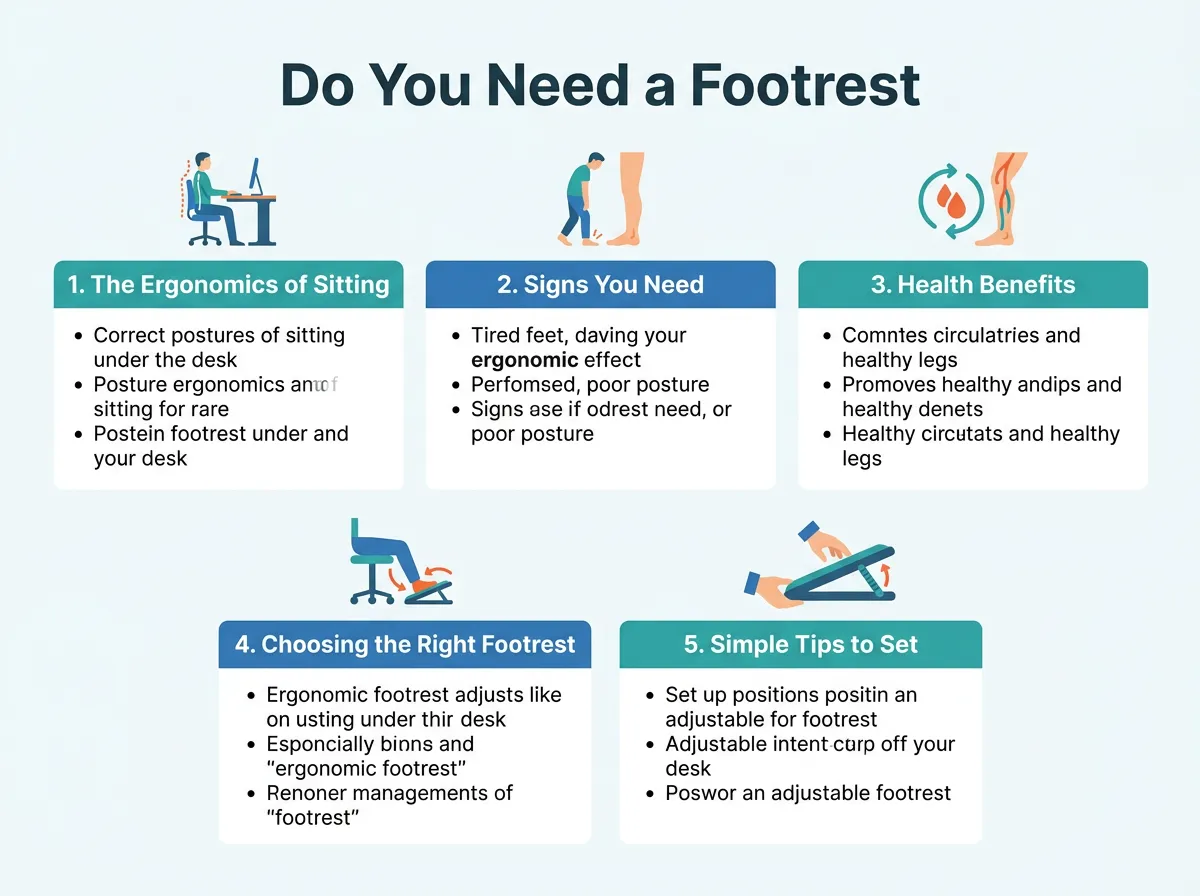
Do You Need a Footrest Under Your Desk? — key points at a glance
Your Feet Do Not Touch the Floor
This is the most obvious sign. Sit back in your chair. Does your back touch the backrest? If yes, look at your feet. Are they dangling? Do they barely touch the carpet? If your feet cannot rest flat and firm, you need support. A footrest under your desk fills this empty gap instantly.
You Constantly Cross Your Legs
Do you find yourself crossing your legs at the knees or ankles? People often do this because their feet lack support. Crossing your legs feels good for a minute because it relieves tension. But it twists your pelvis. Over time, this bad habit causes hip misalignment and lower back pain. Putting a footrest under your desk helps keep your feet flat and your pelvis straight.
You Slide Forward in Your Chair
If your feet do not reach the ground, you might slide forward. You do this to get your feet flat on the floor. But now, your back is no longer supported by your chair. You are slouching. This puts immense pressure on your spine and neck.
Health Benefits of an Ergonomic Footrest
Adding a footrest is not just about comfort. It is about your health. Many workers find that a high-quality ergonomic footrest is worth the investment because of the great health perks it offers.
Boosted Blood Circulation
When your legs dangle, the edge of your chair presses into your thighs. This pressure acts like a dam. It slows down the blood flowing back up to your heart. This can make your legs feel numb or tingly. A footrest lifts your feet and relieves that thigh pressure. Blood can flow freely again.
Less Pressure on the Lower Back
When your feet rest on a firm surface, they share the weight of your upper body. If your feet are dangling, your lower back must carry all that weight alone. Supporting your feet immediately takes the load off your spine.
Reduced Leg and Foot Swelling
Do your ankles look puffy at the end of the day? Sitting still for hours makes fluid pool in your lower legs. A tilted footrest lets you stretch your calves. This movement helps pump fluid back up your body. It reduces swelling and keeps your legs feeling light.
Choosing the Right Footrest for Your Setup
Not all footrests are the same. You need to choose one that fits your body and your habits. If you look at a Consumer Reports guide to office accessories, you will see many different types.
Height and Angle Adjustability
A good footrest under your desk should adjust to your height. Some days you might wear flat shoes. Other days you might wear heels. An adjustable footrest lets you change the height and tilt. This ensures your ankles stay at a comfortable angle.
Material and Texture Options
Do you like to work in your socks or bare feet? If so, look for a soft foam footrest. Foam feels warm and cozy. If you wear shoes, a hard plastic or wooden footrest is better. They are easy to wipe clean. Some hard models have bumps on them to massage your feet.
Active vs. Static Footrests
Static footrests stay still. Active footrests can rock back and forth. Rocking footrests are great for restless sitters. They keep your ankles moving. This motion is fantastic for your blood flow.
Simple Tips to Set Up Your Footrest
Once you place a footrest under your desk, you need to use it correctly. Here is how to set it up for maximum comfort.
Finding Your Perfect Angle
Place the footrest under your desk. Sit all the way back in your chair. Put your feet flat on the footrest. Adjust the height until your knees are slightly higher than your hips. Tilt the surface so your feet rest naturally. Do not bend your ankles too much.
Combining with Your Standing Desk
Do you use a standing desk? You can still use a footrest! When standing, you can rest one foot on the footrest. This shifts your weight and gives your lower back a break. Alternate feet every fifteen minutes to stay comfortable while standing.
Conclusion
So, do you need a footrest under your desk? If you want to sit pain-free, the answer is often a resounding yes. It is a simple tool that solves big posture problems. It keeps your spine aligned, improves your blood flow, and keeps you comfortable all day long. Stop letting your feet dangle. Give your body the support it deserves and enjoy a happier, healthier workday.
Frequently Asked Questions
Can a footrest help with back pain?
Yes, a footrest helps reduce back pain by taking pressure off your lower spine. It keeps your hips aligned and allows you to sit fully back in your chair. This prevents slouching and muscle strain.
How high should a desk footrest be?
Your footrest should be high enough to keep your knees slightly higher than your hips. This height ensures your feet rest flat and stable. It also relieves pressure on the back of your thighs.
Should my feet be flat on a footrest?
Yes, your feet should always rest flat on the footrest. This position distributes your body weight evenly. It also keeps your ankles at a safe and comfortable angle.
Can I use a footrest with a standing desk?
Yes, you can use a footrest while standing at your desk. Resting one foot on the footrest shifts your weight and relieves lower back tension. You should alternate feet every few minutes for the best results.
Is a soft or hard footrest better?
A soft foam footrest is best if you like to work in socks or bare feet. A hard plastic or wooden footrest is better if you wear shoes. Hard models are also easier to clean and often feature massage bumps.
Does a footrest improve blood flow?
Yes, a footrest improves blood flow by stopping your chair from pressing into your thighs. It also allows you to move and stretch your ankles. This movement prevents blood and fluid from pooling in your legs.
