



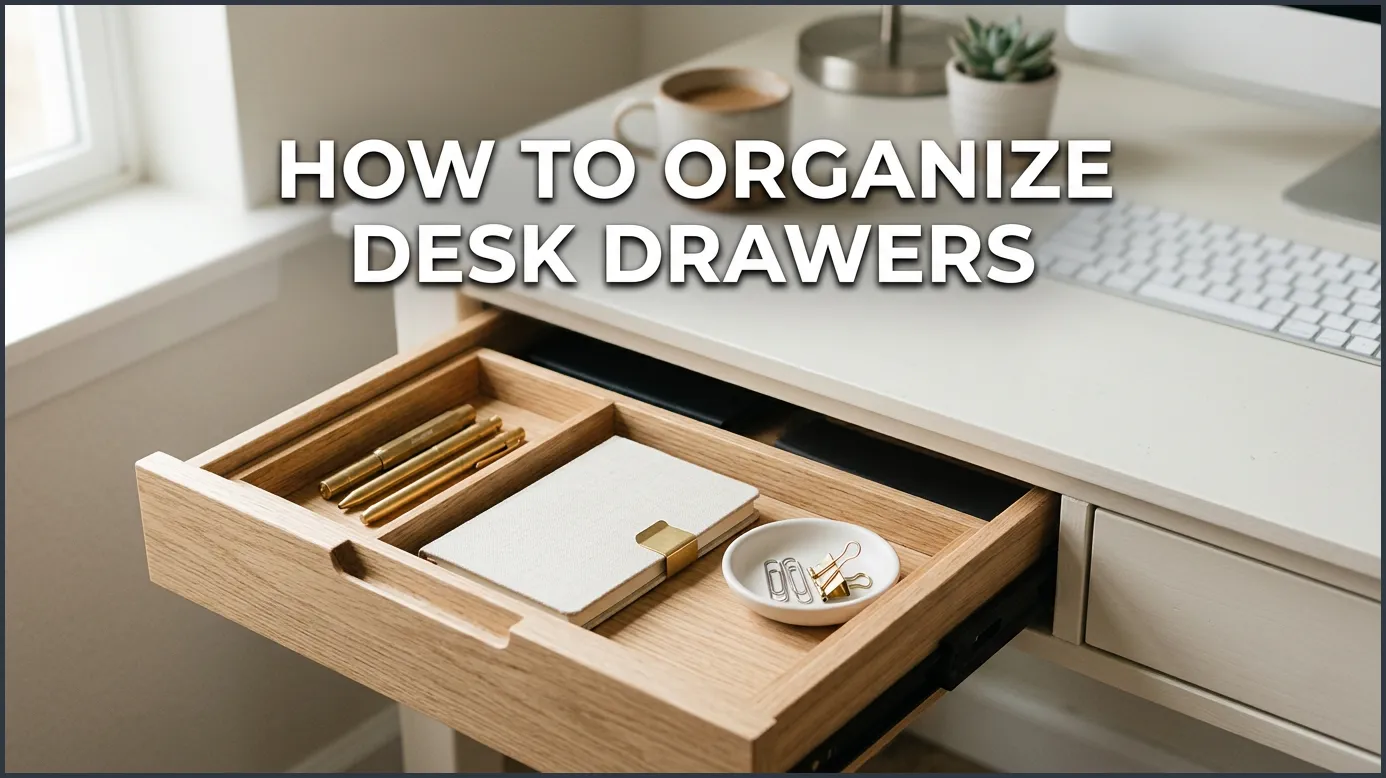
Organizing your desk drawers starts with emptying everything out, sorting items by category, and purging what you do not need. By using modular drawer dividers and arranging tools by frequency of use, you can maintain an efficient workspace. This simple process saves time, reduces daily stress, and keeps your mind clear for deep work.
Have you ever sat down at your desk, ready to tackle a big project, only to find yourself searching for a single working pen? You slide open your desk drawer, and a wave of anxiety hits you. It is a chaotic mess of old receipts, dry highlighters, loose paperclips, and forgotten snacks. Instead of focusing on your work, you are now digging through layers of junk.
A messy desk drawer does more than just look bad. It slows down your workflow and adds unnecessary stress to your day. Fortunately, you can reclaim your workspace with just a little bit of time and planning. You do not need a lot of money or a degree in interior design to fix this problem.
In this complete guide, we will show you exactly how to organize desk drawers so you can find what you need in seconds. We will cover everything from sorting your tools to choosing the best organizers. By the end, you will have a clean, functional workspace that inspires you to do your best work. Let us dive in!
Why You Need to Know How to Organize Desk Drawers
Before we look at the steps, let us talk about why learning how to organize desk drawers is so helpful. When your desk is clean, your brain feels calmer. You do not get distracted by visual clutter. You can find your tools fast. This means you get more done in less time. A tidy drawer also protects your office supplies from getting damaged.
Key Takeaways
- Empty first: Clear out the entire drawer before trying to organize it.
- Purge ruthlessly: Test pens, throw away old trash, and donate duplicates.
- Group by function: Keep similar items together, like writing tools in one zone.
- Use dividers: Small trays and dividers keep items from sliding around.
- Prioritize proximity: Put daily-use items in the top drawer and rare items at the bottom.
- Maintain weekly: Spend two minutes at the end of each week putting things back in place.
📑 Table of Contents
Step 1: Empty and Clean Your Drawers
The first step in learning how to organize desk drawers is to start with a blank canvas. It is tempting to just move things around inside the drawer. However, this rarely works. You need to see exactly what you are working with. If you are researching how to organize desk drawers, you might feel overwhelmed. Do not worry. The clean slate method simplifies everything.
The Clean Slate Method
Pull your drawers completely out of your desk if you can. Empty every single item onto a large flat surface, like your desktop or a nearby table. Do not leave a single paperclip behind. It is amazing how much junk can hide in the very back of a dark drawer.
Once the drawers are empty, take a close look inside. You will likely see dust, eraser shavings, and ink smudges. Take a damp microfiber cloth and wipe down the inside of each drawer. If there are sticky spots, use a mild soap or a gentle multi-surface spray. Let the drawers dry completely before you put anything back. This clean start feels great. It gives you fresh motivation to continue your project.
Step 2: Categorize and Purge Your Items
Now that your drawers are empty and clean, you have a big pile of stuff on your desk. It is time to sort through it. Knowing how to organize desk drawers means knowing what to keep and what to toss. Sorting is a critical part of how to organize desk drawers successfully.
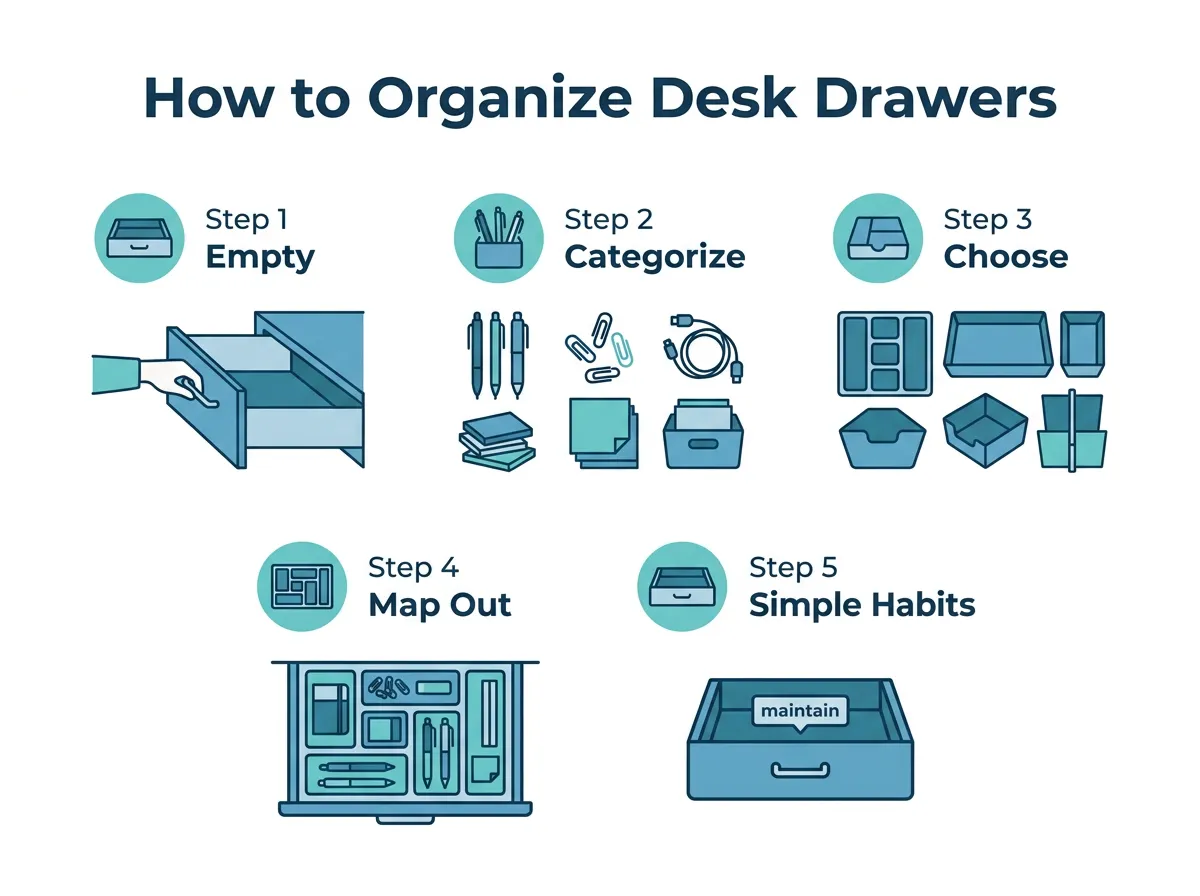
How to Organize Desk Drawers — key points at a glance
The Three-Pile Sorting System
To make this easy, divide your items into three clear piles: Keep, Move, and Trash.
- Keep: This pile is for items you use often at your desk. This includes daily pens, notebooks, and chargers.
- Move: This pile is for items that belong somewhere else. For example, coffee mugs belong in the kitchen. Extra tools might go to the supply closet.
- Trash: This pile is for items that are broken, expired, or useless. This includes dried-up markers and old receipts.
Testing and Decluttering
Be ruthless during this step. Test every single pen on a scrap piece of paper. If a pen is dry or scratchy, throw it away immediately. Throw out old receipts, dry glue sticks, and scrap paper. If you have ten black pens, you probably only need two or three in your main drawer. Put the extras in a backup supply bin. For more inspiration on this step, you can read these professional organizing tips from Apartment Therapy which explain how to detach from workspace clutter. Reducing your inventory is a key secret to keeping your drawers neat over time.
Step 3: Choose the Right Organizers
If you put your loose items right back into the empty drawer, they will roll around every time you open it. This is why learning how to organize desk drawers requires some simple organizing tools. Organizers keep your items separated and easy to grab.
Finding the Perfect Fits
Measure the width, depth, and height of your drawers before you buy anything. Height is especially important. Many standard drawer organizers are too tall for shallow desk drawers. You do not want to buy beautiful trays only to find out your drawer will not close.
Look for modular trays. Small, separate plastic or bamboo trays are great. They let you customize the layout to fit your specific tools. You can mix and match square and rectangular shapes. Check out Neat Method’s advice on choosing drawer organizers to see how different sizes fit together in a tight drawer space.
Budget-Friendly Hacks
Many people ask how to organize desk drawers without spending money. The answer is simple: use what you already have. You do not need to spend a lot of money to get organized. You can find excellent, cheap options at local stores. In fact, these Dollar Store storage hacks show how to use cheap trays and bins to make your drawers look beautiful.
You can also upcycle items from around your home. Small jewelry boxes, clean teacups, and phone boxes make wonderful drawer dividers. Even ice cube trays work wonders for holding tiny items like paperclips, pushpins, and binder clips.
Step 4: Map Out Your Layout
Now comes the fun part: putting everything back. How you arrange your items determines how easy they are to use. When planning how to organize desk drawers, you must think about your daily routine.
The Priority Zone Rule
Think of your drawers as prime real estate. The drawers closest to your dominant hand are your high-priority zones. A major rule of how to organize desk drawers is the priority zone rule.
- Top Drawer (High Priority): This drawer should hold the items you use multiple times a day. This includes your favorite pens, a notepad, your headphones, and your phone charger. Keep these items right at the front.
- Middle Drawer (Medium Priority): This drawer should hold items you use daily or weekly. This might be your stapler, tape dispenser, sticky notes, and calculator.
- Bottom Drawer (Low Priority): This is the place for items you use rarely. This is the place for extra printer paper, tax documents, and backup office supplies.
Maintaining “Blank Space”
Do not feel the need to fill every single inch of your drawer. Having some empty space is actually a good thing. It gives your eyes a place to rest. It also leaves room for new items you might acquire later. Try to keep at least ten percent of your drawer space completely empty. This makes the drawer feel airy and clean.
Step 5: Simple Habits for Long-Term Maintenance
Once you discover how to organize desk drawers, you want to keep them that way. It is easy to let things slip back into chaos after a busy week. The secret is building simple, quick habits. If you want to master how to organize desk drawers, consistency is key.
The Five-Minute Friday Reset
Set a recurring alarm on your phone for Friday afternoon, right before you finish work. Spend just five minutes putting everything back in its place. Toss out any trash that accumulated during the week. Put your pens back in their correct trays. Wipe down the desk surface quickly. This small habit ensures that when you sit down on Monday morning, you are greeted by a clean, inspiring workspace. It is a wonderful gift to your future self.
Conclusion
Knowing how to organize desk drawers is a simple skill that delivers massive benefits. It saves you time, reduces daily frustration, and helps you focus on your actual work. By emptying your drawers, purging the clutter, using smart dividers, and setting up daily zones, you can build a system that works for you.
Remember, organization is not about perfection. It is about creating a space that supports your productivity and peace of mind. Take a look at your desk drawers today. Pick just one drawer to start with, and enjoy the wonderful feeling of a clean workspace!
Frequently Asked Questions
What is the best way to organize shallow desk drawers?
The best way to organize shallow drawers is to use low-profile, modular trays or shallow drawer dividers. This keeps tiny items like pens, paperclips, and sticky notes from rolling around when you open the drawer. You can also upcycle shallow jewelry box lids as free DIY dividers.
How do I stop items from sliding around inside the drawer?
You can stop items from sliding by lining your drawers with a non-slip silicone or foam drawer liner before placing your trays inside. Alternatively, you can use double-sided tape, hook-and-loop fasteners, or small adhesive rubber feet on the bottom of your organizer bins to lock them in place.
How often should I declutter my desk drawers?
You should do a quick, five-minute reset of your drawers once a week, preferably on Friday afternoon. For a deeper clean and decluttering session, aim to empty out and wipe down your drawers every three to six months to catch dried-up pens and unneeded paperwork.
Can I organize my desk drawers on a tight budget?
Yes, you can easily organize your drawers on a tight budget by using everyday household items. Clean cardboard boxes, shallow gift box lids, muffin tins, ice cube trays, and teacups make excellent, free dividers for office supplies. You can also wrap cardboard boxes in pretty paper for a custom look.
What should I do with cables and chargers?
Keep cables and chargers tidy by wrapping them individually and securing them with twist ties, hook-and-loop straps, or hair elastics. Store them in a dedicated section of your drawer, or use a small modular bin to keep them from tangling with other office supplies.
What items should never go in a desk drawer?
You should never store wet or liquid items, open snacks, or highly sensitive documents without protection in your desk drawers. Additionally, try to avoid storing bulky electronics or items you do not use on a weekly basis, as they take up valuable space that should be reserved for daily tools.
