



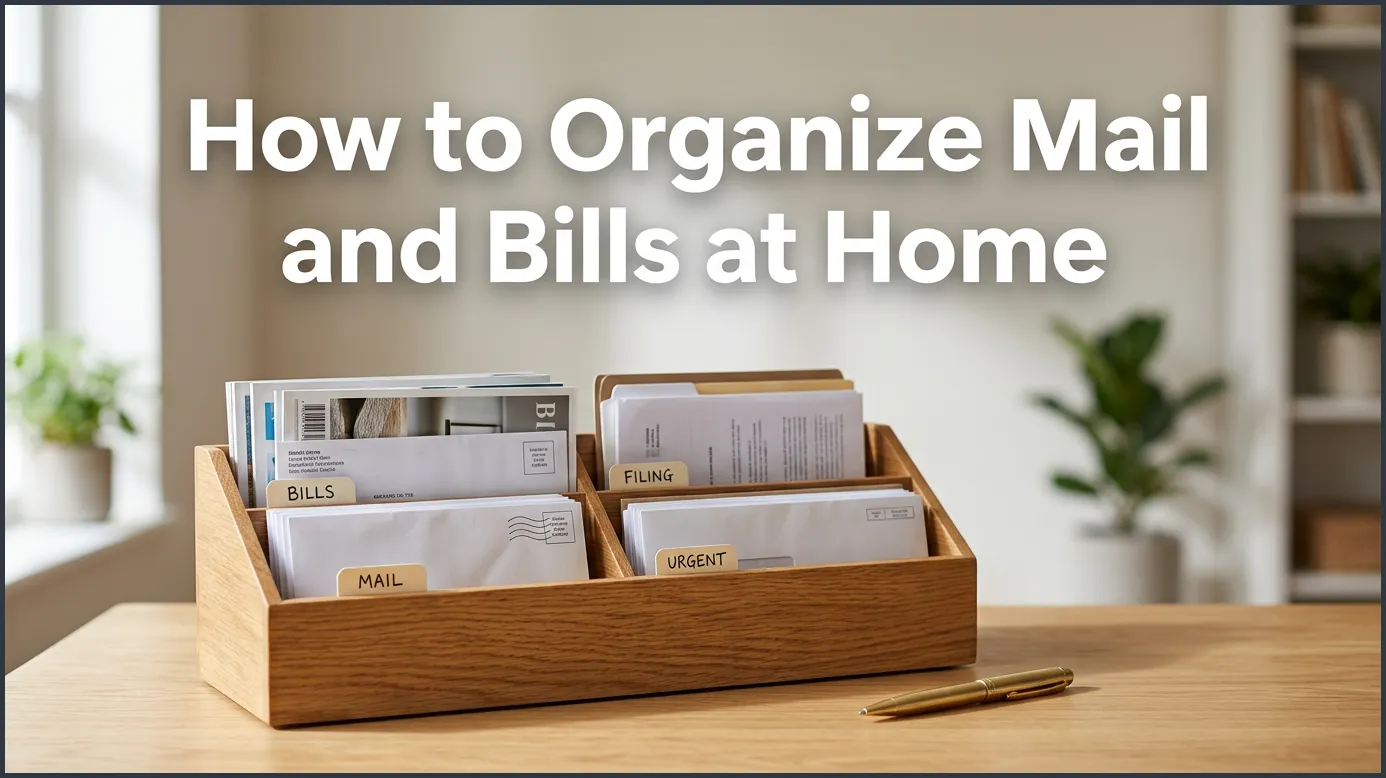
Taming paper clutter starts with establishing a daily sorting routine and building a dedicated physical processing station in your home. By separating your mail immediately into actionable categories, digitizing your bills, and scheduling a weekly “admin day,” you can eliminate stress and ensure you never miss a payment deadline again.
We all know the feeling. You walk through the front door after a long, busy day. Your hands are full of grocery bags, car keys, and a thick stack of envelopes. Lacking a better option, you toss the papers onto the kitchen counter. Within just a few days, that small pile grows into a towering mountain. Important letters get lost. Electric bills slip to the bottom. You might even miss a payment due date because of the mess.
This common stress can ruin your peace of mind. Paper clutter has a sneaky way of taking over our living spaces and our minds. Fortunately, you do not have to live with this constant visual noise. In this comprehensive guide, we will discover the ultimate plan for how to organize mail and bills at home once and for all.
Managing your household paperwork does not require complex tools or hours of free time. It only requires a simple, repeatable system. By setting up a dedicated space and practicing simple habits, you can take complete control of your mailbox. Let us dive into the easy steps to transform your home from chaotic to completely organized.
Key Takeaways
- Create a Dedicated Station: Set up a central physical space in your home with bins and tools to manage incoming papers immediately.
- Use the One-Touch Rule: Sort mail the moment it enters your house so clutter never has a chance to accumulate on your counters.
- Categorize into Three Piles: Divide all incoming paper into Action, File, and Recycle folders to keep processing simple and fast.
- Go Paperless Where Possible: Reduce the physical influx of mail by signing up for digital statements and automated bank payments.
- Set an Admin Day: Block out 15 minutes every single week to pay bills, file important documents, and shred sensitive information.
📑 Table of Contents
- Why Learning How to Organize Mail and Bills at Home Matters
- Step 1: Designate Your Mail Command Center
- Step 2: Establish the Daily One-Touch Sorting Rule
- Step 3: Streamline Your Bills and Financial Paperwork
- Step 4: Schedule a Weekly “Admin Day” Routine
- Step 5: Maintain Long-Term Paper-Free Habits
- Conclusion
Why Learning How to Organize Mail and Bills at Home Matters
Many people view mail as a minor annoyance. However, disorganized paper can cause major problems in your life. When you master how to organize mail and bills at home, you save money. You avoid costly late fees. You prevent damage to your credit score. Best of all, you reclaim your clean countertops and dining tables.
A neat home environment also lowers your daily stress levels. Visual clutter triggers anxiety in many people. A pile of unopened envelopes represents a list of unfinished tasks. By creating a system, you replace that daily dread with a feeling of control and confidence.
Step 1: Designate Your Mail Command Center
The first step in how to organize mail and bills at home is finding the perfect spot for your paperwork. If you do not have a dedicated station, mail will land on random surfaces. Choose a high-traffic area near your main entrance or kitchen.
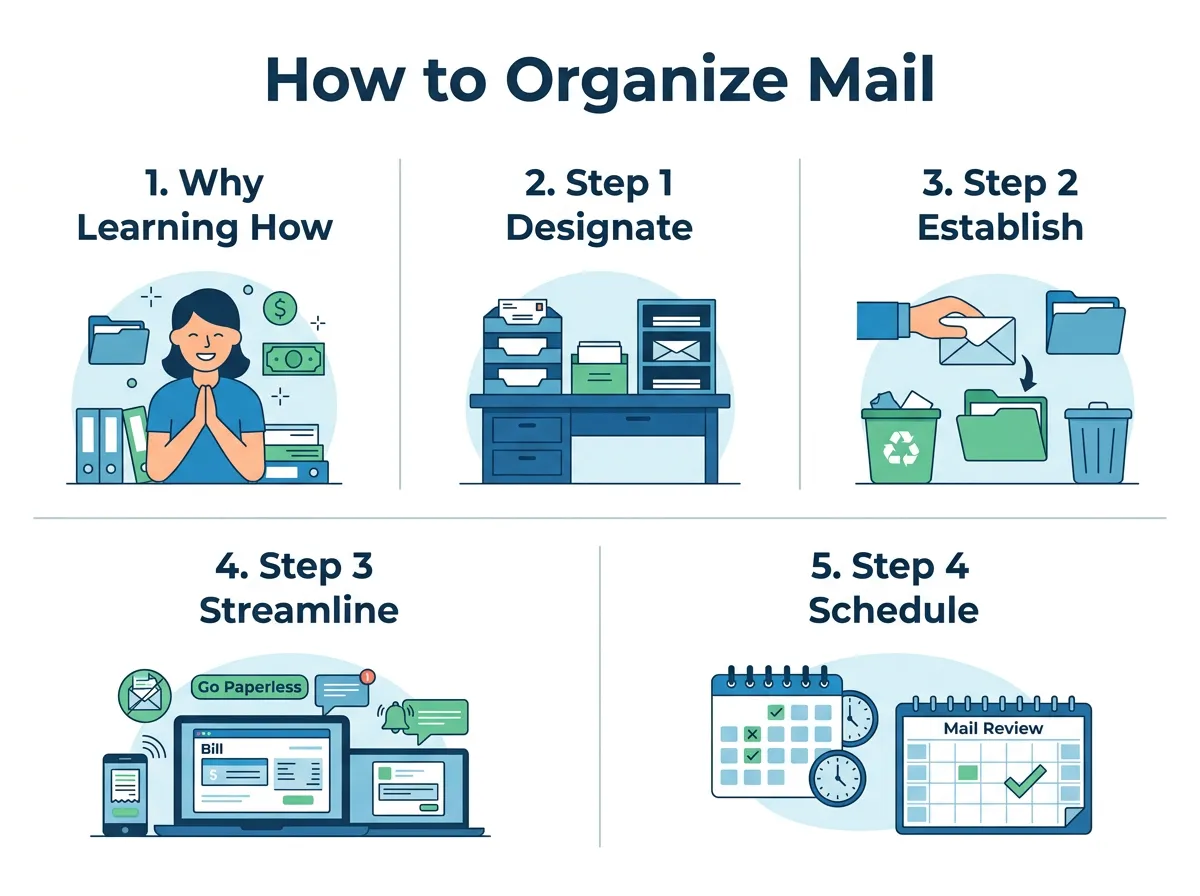
How to Organize Mail and Bills at Home — key points at a glance
Choosing the Right Location
Pick a spot that you pass by every day. A small console table in the entryway or a corner of your kitchen counter works best. Make sure this area is easy to access. If your station is hidden away in a home office, you will not use it consistently.
Essential Supplies for Your Station
Keep your command center simple. You do not need expensive organizing gadgets. A few basic tools will make learning how to organize mail and bills at home incredibly fun and easy:
- A small desktop file rack or letter sorter with three slots.
- A stylish wastebasket placed directly underneath or next to the table.
- A pen, a letter opener, and a roll of postage stamps.
- A small paper shredder for protecting your personal information.
Step 2: Establish the Daily One-Touch Sorting Rule
Once you know how to organize mail and bills at home, the daily sort is very easy. The golden rule of paper management is simple: touch each piece of paper only once. This means you do not look at a letter, put it down on the counter, and promise to deal with it later.
The Three-Pile Sorting System
Every time you bring mail inside, walk directly to your command center. Sort the items immediately into three clear categories:
- Action: This pile is for items that require you to do something. It includes unpaid bills, RSVPs, or forms to sign.
- File: This pile is for papers you must keep but do not require immediate action. Think of tax documents, home repair receipts, or medical records.
- Recycle: This is for junk mail, catalogs you do not want, and empty envelopes. Toss these into the recycling bin immediately.
Dealing with Junk Mail Instantly
Up to eighty percent of your daily mail is likely junk. Do not let it sit on your table for even a minute. Toss flyers, coupons you will never use, and credit card offers straight into your recycling bin or shredder. Removing the noise makes managing your real mail much easier.
Step 3: Streamline Your Bills and Financial Paperwork
As you explore how to organize mail and bills at home, bills deserve special care. Missing a utility bill can result in service interruptions. A late credit card payment can hurt your financial health. You need a foolproof way to track what you owe.
Transitioning to Digital Statements
The easiest way to organize physical bills is to stop receiving them in the first place. Log into your utility, bank, and credit card accounts online. Opt for paperless billing. This simple step reduces the physical paper entering your house by ninety percent. You will receive email alerts instead of paper envelopes.
Creating a Visual Bill-Paying Tracker
If you still prefer paper bills, create a dedicated “To Pay” folder in your desktop file rack. When a bill arrives, write the due date in bold marker on the front of the envelope. Place it at the front of your “Action” pile. You can also use a simple paper calendar on your wall to write down due dates as they arrive. These automatic systems are key to how to organize mail and bills at home successfully.
Step 4: Schedule a Weekly “Admin Day” Routine
The secret sauce of how to organize mail and bills at home is consistency. Sorting your mail daily is wonderful, but you must also process your action items. Choose one day a week to sit down and tackle your paperwork.
Setting a 15-Minute Weekly Appointment
Sunday afternoon or Friday morning are great times for this routine. Put a recurring 15-minute appointment on your digital calendar. Treat this time as an important meeting with yourself. This weekly ritual is how to organize mail and bills at home without getting overwhelmed.
Processing Payments and Filing Safely
During your weekly session, open your “Action” folder and complete the tasks:
- Pay all the bills that are due in the next two weeks.
- File paid bills in a cabinet or scan them to your computer.
- Sign permission slips, mail out RSVPs, and reply to official letters.
- Shred personal bills, bank statements, and tax documents you no longer need.
Step 5: Maintain Long-Term Paper-Free Habits
Now that your system is running, you must keep it alive. Maintaining your system is how to organize mail and bills at home for the long run. Over time, your needs might change, but the core habits should remain the same.
Annual File Purges
Once a year, go through your permanent filing cabinet. You do not need to keep utility bills from five years ago. Keep tax returns for seven years, but shred old bank statements and expired insurance policies. This annual clean-up keeps your filing drawers light and functional.
Encouraging Family Participation
You do not have to do this alone. Teach your kids and spouse how to organize mail and bills at home to build great habits for the whole family. Show them where their mail belongs. Give each family member their own folder in the command center. When everyone helps, the counters stay clean.
Conclusion
Now you have a complete plan for how to organize mail and bills at home. By creating a physical mail station, using the one-touch rule, and setting a weekly admin day, you can defeat paper clutter forever. This simple routine takes less than five minutes a day but saves you hours of future stress.
Start today by clearing off your kitchen counter and finding a beautiful basket for your new mail station. Once you experience the peace of an organized home, you will never want to go back to the clutter. Share your tips on how to organize mail and bills at home with your friends, and enjoy your tidy new space!
Frequently Asked Questions
How long should I keep physical copies of my paid bills?
Generally, you should keep utility and credit card bills for one year. If they are related to tax deductions, keep them for seven years. Always shred them before throwing them away to protect your identity.
Where is the best place to set up a home mail station?
The best place is near the entryway where you naturally drop your keys and bags. A small table in the foyer or a small corner of your kitchen counter works perfectly because it is convenient.
How can I stop receiving so much junk mail?
You can opt-out of credit card offers online and contact direct marketing associations to remove your address from mailing lists. Doing this reduces the physical paper entering your house significantly.
What should I do if I share mail with a roommate or spouse?
Create separate “Action” folders for each person at your mail station. When you sort the mail daily, drop their letters into their folder so they can process them during their own time.
Is it safe to switch all of my bills to paperless?
Yes, paperless billing is highly secure and often safer than physical mail because it prevents mail theft. Just make sure to use strong, unique passwords for your online banking accounts.
How do I handle important papers that I must keep forever?
Store permanent documents like birth certificates, social security cards, and house deeds in a fireproof safe. You can also keep digital backups of these items on a secure cloud drive.
