

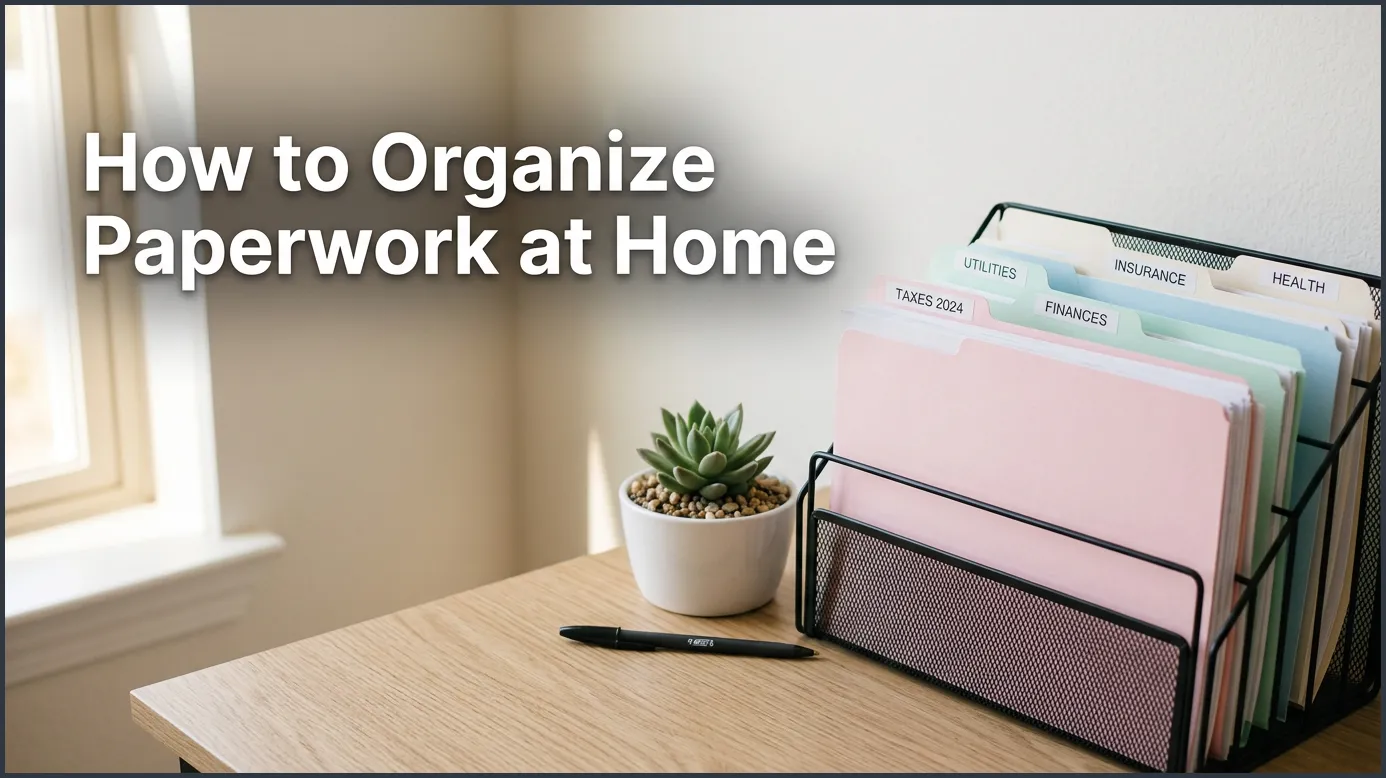
Tame your home document clutter by creating a simple, three-tiered paper management system. Group your files into immediate action piles, temporary reference files, and long-term secure archives. By using basic tools like binder clips, color-coded folders, and a digital scanner, you can keep your desk clear and find any document in under sixty seconds.
Picture this. You walk through your front door after a long, busy day. You want to sit down and relax. Instead, you look at your kitchen counter and see a massive pile of paper. There are unopened envelopes, school forms, bills, and grocery store ads. This sight can make your heart sink. It makes your whole home feel messy, even if the floors are clean.
Dealing with this mess can feel like a hard chore. You might not know where to start, or you might worry about throwing away something vital. If you want to know how to organize paperwork at home, you have come to the right place. You do not have to live with this daily stress. Learning how to organize paperwork at home can bring peace back to your space and save you hours of lost time.
In this guide, we will walk you through a simple path. We will show you how to sort your pile, set up an easy filing system, and keep the clutter away for good. You do not need expensive tools or a lot of free time. All you need is a clear plan. Let us get started on making your home neat and clean.
Key Takeaways
- Group everything first: Gather all your papers in one spot before you start sorting.
- Use a daily drop zone: Stop clutter at the door by sorting mail the moment it arrives.
- Color-code your folders: Assign colors to different parts of your life to find files fast.
- Go digital when possible: Use free phone apps to scan and shred daily receipts and manuals.
- Secure vital papers: Keep your most important documents in a small fireproof safe.
- Set a weekly routine: Spend ten minutes each week to keep your paper system clean.
📑 Table of Contents
Step 1: Gather and Sort Your Paper Pile
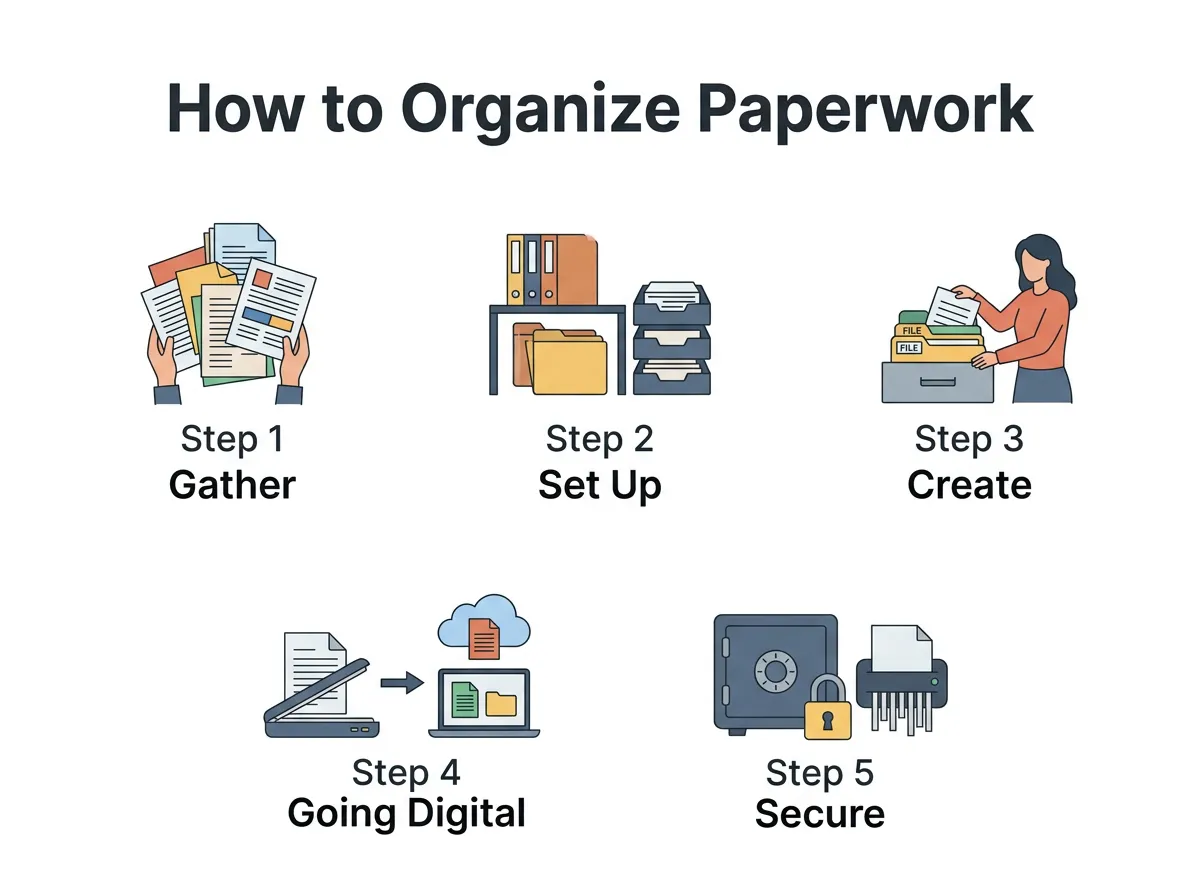
To start, let us focus on how to organize paperwork at home by tackling the backlog. The first step is to bring all your papers into one place. Search your house from top to bottom. Check the kitchen table, the couch, the desk drawers, and your bags. Gather every single piece of paper you find and put them in one big pile. This might look scary at first, but it is the best way to start fresh.
Once you have your pile, you must sort it. Do not try to organize the files as you go. Just focus on sorting. Grab three simple boxes or laundry baskets and label them. One is for trash, one is for action, and one is for keeping. This is the foundation of learning how to organize paperwork at home.
The Initial Sort
Sit down in a comfortable spot with your boxes. Pick up one piece of paper at a time and make a quick choice. Does this paper need your attention right now? If yes, put it in the action box. Is it junk mail? Put it in the trash box. Is it something you must save for the future? Put it in the keep box.
Do not spend more than a few seconds on each item. Keep your momentum going. It is vital to learn how to clear paper clutter fast so you do not get tired. If you are not sure about a paper, put it in the keep pile for now and decide its fate later.
What to Keep and What to Toss
Many people keep too much paper because they are afraid. They fear they might need an old utility bill from five years ago. Most of the time, you do not need it. You can shred utility bills that are more than a year old. You can also throw away old catalogs and flyers right away.
Keep only what is truly important to your life. This includes tax papers, health records, and birth certificates. When you learn how to organize paperwork at home, you learn that less is always more. The fewer papers you keep, the easier your life will be.
Step 2: Set Up an Action Center
Setting up an action center is a great trick for how to organize paperwork at home. Now you have sorted your big pile, and you have a box of papers that need action. These are bills to pay, forms to sign, and letters to answer. If you just leave them in a pile, they will get lost. You need a dedicated action center.
How to Organize Paperwork at Home — key points at a glance
An action center is a small, neat spot in your home. It could be on your desk or on a kitchen counter. This is where active papers live. It keeps them from spreading across your house. This is a key step in how to organize paperwork at home.
The Daily Drop Zone
Create a drop zone near your front door. This is where you put mail the moment you walk inside. Put a small tray or basket here. When you bring mail home, do not put it on the table. Put it in the drop zone.
Open your mail over the recycling bin. Throw away the junk mail right away. Put the important bills and letters into your action center. This stops the clutter before it even starts. It is a simple habit that makes a huge difference.
The To-Do Binder
Use a simple three-ring binder for your tasks. You can use plastic sleeves inside. Label one sleeve for bills to pay. Label another for RSVP cards. Label a third for papers you need to sign.
This binder keeps your tasks organized. When you sit down to pay bills, just open the binder. Everything you need is in one place. You will never miss a due date again.
Step 3: Create an Easy Filing System
Let us dive deeper into how to organize paperwork at home using physical folders. Now let us look at your keep pile. These are papers you need to save but do not need to act on. You need a safe place to put them. A good filing system is the heart of how to organize paperwork at home.
Your filing system does not have to be complex. If it is too hard, you will not use it. Keep it as simple as you can. You can use a plastic file box or a drawer in your desk.
Color-Coded Folders
Color coding makes filing fun and easy. It helps your brain find things fast. You can buy a pack of colored folders at any store. Assign one color to each part of your life.
For example, use green folders for money papers. Use blue folders for health records. Use yellow folders for car papers. Use red folders for home and utility bills. When you look at your file box, you can go straight to the right color. This is a smart trick when figuring out how to organize paperwork at home.
Categorizing Your Files
Inside each color group, make clear labels. Keep the names simple. Write words like “Car Insurance” or “Tax 2023.” Do not make too many folders. If you have too many, it gets hard to choose.
You can read more about organizing vital personal papers to help you decide what to keep. Group similar files together. For example, keep all your utility bills in one folder. You do not need a separate folder for water, gas, and power. One folder for “Utilities” is enough.
Step 4: Going Digital with Document Scanning
Going paperless is a great way to master how to organize paperwork at home. We live in a digital world. You do not need to keep physical paper for everything. You can scan many of your documents. This saves a lot of physical space in your home.
Once you scan a paper, you can shred the original. This is great for receipts, user manuals, and school projects. It keeps your home free of bulky file boxes.
Choosing the Right Scanner App
You do not need a big, expensive machine to scan papers. You can use your phone. There are many free apps that turn photos into clean PDF files. These apps are fast and easy to use.
Just lay the paper on a flat surface with good light. Hold your phone over it and take a photo. The app will crop the page and make the text clear. Then you can save it to your computer or cloud drive.
Naming Your Digital Files
How you name your files is very important. If you do not name them well, you will never find them again. Use a standard format. A good way is to start with the year, then the month, then the name.
For example, name a file “2023-11-Electric-Bill.pdf”. This keeps your digital files in order. It makes searching for a document fast and painless.
Step 5: Secure Your Most Important Documents
Protecting your files is another key part of how to organize paperwork at home. Some papers are too important to lose. You cannot just put them in a regular folder. You need to keep them safe from fire, water, and theft.
These papers are hard to replace. You should keep them in a secure place. A secure box will give you peace of mind.
Fireproof Boxes and Safes
Buy a small fireproof and waterproof safe. You can find these online or at office supply stores. Keep it in a secure spot in your home. This is where your most valuable papers go.
If you need ideas on where to store these, look into choosing the right paper storage bins for your home. A strong safe will protect your papers in an emergency. It is a small investment that is worth every penny.
Crucial Papers Checklist
What belongs in your safe? Here is a quick list of papers you must protect:
- Birth certificates and passports
- Marriage licenses and wills
- Social Security cards
- House deeds and car titles
- Insurance policy details
Keep these in clear plastic sheets inside your safe. This keeps them clean and dry.
Step 6: Maintain Your New Paper System
Consistency is the final piece of the puzzle when you look at how to organize paperwork at home. Now you have a great system. Your counters are clean. Your files are in order. But your work is not quite done. Paper will keep coming into your home. You must maintain your system, or the clutter will return.
Setting up the system is the first part. Keeping it clean is the second part. This is the secret of how to organize paperwork at home for the long term.
The Weekly Paper Clean-Up
Pick one day a week to manage your paper. Sunday night or Friday afternoon work well. Spend just ten or fifteen minutes.
Go through your action center. Pay any bills that are due. File the papers you need to keep. Throw away any trash. This weekly habit stops the paper from building up again. It keeps your system working smoothly.
The Annual Purge
Once a year, go through all your files. January is a great time for this. Open your filing cabinet. Look at each folder.
Toss out things you do not need anymore. You can throw away old insurance policies that have ended. You can get rid of old tax backup documents if they are too old. This makes room for the new papers of the coming year. It keeps your files slim and easy to use.
Conclusion
Learning how to organize paperwork at home is a journey. It takes some time at the start. But the rewards are huge. You will no longer feel stressed when you look at your kitchen counter. You will know exactly where your important papers are.
Start small. Do not try to do everything in one day. Sort your first pile today. Set up your folder colors tomorrow. Step by step, you will gain control of your paper clutter. Your home will feel lighter, and so will you.
Frequently Asked Questions
How long should I keep utility bills?
You should keep utility bills for one year. Once you receive the year-end statement, you can safely shred the monthly bills. If you need them for tax deductions, keep them for seven years.
What paperwork should be kept forever?
You should keep vital documents forever. This includes birth certificates, social security cards, marriage licenses, and wills. These papers are very hard to replace and must be kept in a safe place.
How do I start organizing a huge pile of paper?
Start by gathering every paper in your house into one big pile. Use three boxes labeled trash, action, and keep to sort them quickly. Do not try to file them yet; just focus on sorting first.
Do I need a physical filing cabinet?
No, you do not need a big filing cabinet. A small plastic file box or a desktop file organizer works great for most homes. You can also scan most papers to keep them on your computer.
What is the best way to stop junk mail?
The best way to stop junk mail is to sort it the moment it enters your home. Throw it directly into your recycling bin before it reaches your counters. You can also contact direct mail registries to remove your name from mailing lists.
Is it safe to store important documents in the cloud?
Yes, storing documents in the cloud is very safe if you use a secure service. Make sure to protect your account with a strong password and two-factor authentication. This gives you a safe backup in case of home emergencies.
