



The best desk size for small rooms balances space-saving design with enough surface area for daily work. Ideally, look for a desk that measures between 36 to 48 inches in width and 20 to 24 inches in depth. This compact footprint fits snugly into tight corners while still comfortably holding a laptop, mouse, and basic work accessories.
Do you look at your bedroom corner and wonder how a workspace could ever fit there? Many of us face this puzzle. We want a cozy, productive office, but we do not have much room. Finding the right balance between comfort and size can feel tough. If your desk is too big, your room feels like a crowded warehouse. If it is too small, you cannot even fit your keyboard and a cup of coffee.
The secret is to focus on smart dimensions. You do not need a massive executive desk to do great work. In fact, a smaller setup often helps you stay more organized and focused. It forces you to get rid of clutter and keep only what you truly need.
In this guide, we will walk you through everything you need to know about choosing the best desk size for small rooms. We will look at exact measurements, smart styles, and simple tricks to make your setup feel spacious and organized. Let us dive in and find your perfect fit.
Key Takeaways
- Ideal Width Range: Look for a desk between 36 and 48 inches wide to fit small rooms without blocking walkways.
- Optimal Depth: Aim for a depth of 20 to 24 inches to ensure comfortable screen viewing and avoid a bulky profile.
- Go Vertical: Choose desks with built-in shelves or a hutch to maximize your storage without using more floor space.
- Corner Solutions: Utilize corner or L-shaped desks to turn empty, awkward spaces into productive work areas.
- Ergonomics Matter: Maintain a standard desk height of 29 to 30 inches to protect your posture and stay comfortable.
- Wall-Mounted Option: Floating desks completely free up floor space, making tiny rooms feel much larger.
📑 Table of Contents
Understanding Desk Dimensions for Small Spaces
When you start shopping, all the numbers can feel dizzying. You see terms like width, depth, and height. To find the best desk size for small rooms, you must understand how these three dimensions affect your physical space.
Width Matters Most
Width is how wide the desk is from left to right. This is often the first thing people look at. In small rooms, every single inch of wall space is precious. If you pick a desk that is too wide, it might block a door, cover a closet, or block an electrical outlet. You need to look at your wall space and think about what else needs to fit along that same wall.
The Importance of Desk Depth
Depth is how far back the desk goes from the front edge to the wall. This measurement is very easy to overlook. However, depth is extremely important for your comfort. If a desk is too deep, it sticks out into the walking path of your room. If it is too shallow, your computer screen will be right in your face. This can cause eye strain and neck pain. Understanding how these factors fit your space is easier when you review a what are good desk dimensions guide to see how depth affects your daily posture.
The Sweet Spot: Perfect Dimensions Exposed
So, what is the best desk size for small rooms? Let us break down the actual numbers that work best for tight spaces. These sizes will help you work comfortably without taking over your living area.
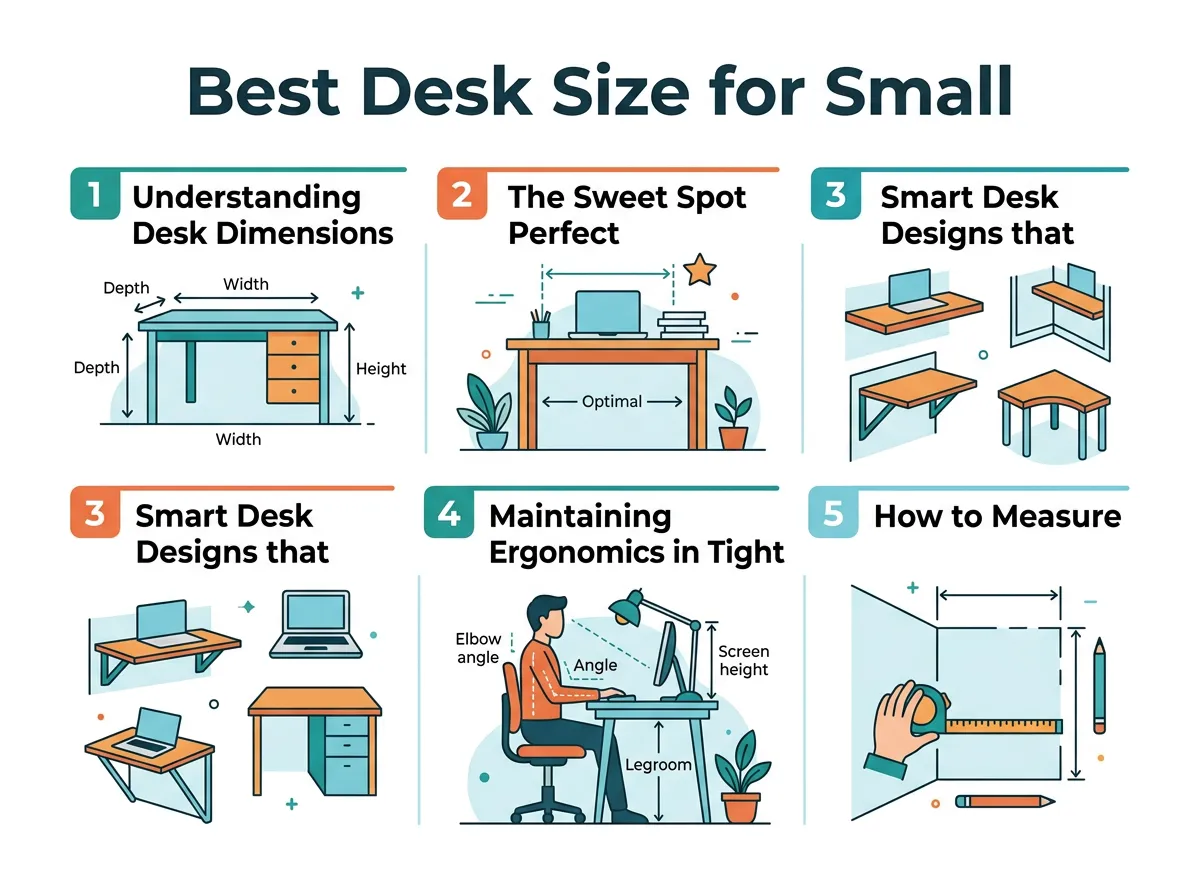
Best Desk Size for Small Rooms — key points at a glance
The Ultra-Compact Setup (36 Inches Wide)
If you have a tiny nook or a closet office, a 36-inch wide desk is a great choice. This width is just enough for a laptop, a small notebook, and a mouse. It is a tight fit, but it gets the job done. It keeps your footprint small and leaves plenty of room to walk around. This size is ideal for students or those who only work on a computer for a few hours a day.
The Standard Small Workspace (42 to 48 Inches Wide)
For most small rooms, the absolute sweet spot is a desk that is 42 to 48 inches wide and 20 to 24 inches deep. This size gives you enough room for a computer monitor, a keyboard, and a mouse. You do not feel cramped, but the desk still sits nicely against a bedroom or living room wall. To compare this with larger setups, checking out standard desk size guidelines can help you see why these smaller dimensions are so effective for tight areas.
Smart Desk Designs that Save Space
Sometimes, finding the best desk size for small rooms is not just about the numbers. It is also about the design of the desk itself. Some designs are made specifically to trick the eye and save floor space.
Floating and Wall-Mounted Desks
Floating desks attach directly to your wall. They have no legs. This is a complete game-changer for small rooms. Without legs, you keep your floor space completely clear. This makes the room look and feel much larger. You can slide your chair underneath easily when you are not working. You can also place a small storage bin or trash can on the floor below the desk.
L-Shaped and Corner Desks
Corners are often wasted spaces in home design. A corner desk fits right into these tight angles. An L-shaped desk can also work well if one side is very short. These designs give you more desk surface without taking over the center of the room. If you are feeling stuck on layout options, look at some creative desk ideas for small spaces to see how others maximize their corners.
Maintaining Ergonomics in Tight Quarters
You should never sacrifice your physical comfort for a small size. Even in a tiny room, your desk needs to support your body. Good ergonomics prevent pain and help you stay focused for longer periods.
Finding the Right Desk Height
Most standard desks are about 29 to 30 inches tall. This height works well for most adults. When you sit at your desk, your elbows should bend at a 90-degree angle while you type. Your feet should rest flat on the floor. If your desk is too high, you might need an adjustable chair or a footrest to stay comfortable.
Keyboard Trays and Monitor Arms
If you choose a very small desk, you can save surface space by using smart accessories. A slide-out keyboard tray keeps your keyboard off the desktop. This leaves the top of your desk free for writing. A monitor arm holds your screen above the desk. This frees up valuable space underneath the screen for books, sticky notes, or your phone.
How to Measure Your Room Like a Pro
Before you buy any desk, you must measure your room carefully. A desk might look tiny in a giant store, but it can look huge in your bedroom. Follow these simple steps to get accurate measurements.
The Golden Rule of Clearance Space
Do not just measure the desk. Measure the space behind it too. You need at least 30 inches of space behind your desk to pull your chair out comfortably. If you do not have this clearance, you will feel trapped every time you sit down to work. Also, check for window heights, wall outlets, and heating vents. You do not want to block your heater or cover the only plug in the room.
Use Painter’s Tape to Test the Size
This is a favorite trick of interior designers. Use painter’s tape to outline the size of the desk on your floor. This gives you a 3D feel of how much space the desk will actually take up. Walk around the taped area for a day. If you keep tripping over it, the desk is too big. If you can move freely, you have found the perfect size.
Creating Your Productive Small Workspace
Choosing the best desk size for small rooms is all about balance. Think about your daily tasks. Do you only use a small laptop? A 36-inch desk will work beautifully. Do you need a large monitor, a printer, and textbooks? Aim for a 48-inch desk.
Remember to keep your setup clean. Use cable ties to hide messy cords. Keep papers in folders. Choose a chair that slides completely under the desk when you are done. With the right desk size and a little planning, you can create a cozy workspace that helps you stay focused and productive every single day.
Frequently Asked Questions
What is the best desk size for a small bedroom?
The best size is usually 42 inches wide by 20 inches deep. This gives you plenty of room for a laptop and a notebook without crowding your bedroom. It sits flush against the wall and keeps walkways clear.
Is a 20-inch deep desk too small?
No, a 20-inch deep desk is perfect for small rooms. It fits a laptop, keyboard, and mouse very comfortably. However, if you use a large desktop computer monitor, you may want to use a monitor arm to save space.
Can I fit a chair under a 36-inch desk?
Yes, most standard office chairs will fit under a 36-inch wide desk. Just make sure to measure the width between the desk legs before buying. Choose a chair without bulky armrests so it slides in completely.
Are corner desks good for small rooms?
Yes, corner desks are excellent because they utilize unused corner space. They offer more surface area while keeping the center of your room open. They are perfect for tight or awkward room layouts.
How much space do I need behind my desk chair?
You should aim for at least 30 inches of clearance behind your desk. This space allows you to push your chair back and stand up easily. Anything less than 30 inches will make your workspace feel cramped.
How can I make a small desk feel bigger?
You can make it feel bigger by keeping it free of clutter. Use a monitor mount to lift your screen off the desk. You can also add floating shelves above the desk to store your books and office supplies.
