



As a general rule, you should mount a floating desk at a standard height of 28 to 30 inches (71 to 76 cm) from the floor for sitting. If you plan to use it as a standing desk, the ideal height typically ranges from 38 to 42 inches (96 to 107 cm), depending on your height. Choosing the right height ensures proper ergonomics, prevents wrist strain, and keeps your posture healthy during long work hours.
Imagine walking into your home office. The space feels open, clean, and modern. That is the magic of a floating desk. It saves valuable floor space, makes small rooms feel much larger, and looks incredibly stylish. But then comes the hard part: actually hanging it on the wall. You hold the desk against the wall, pencil in hand, and suddenly freeze.
You ask yourself, how high should you mount a floating desk? It is a simple question, but it has a massive impact on your daily life. If you hang it just a few inches too high, your shoulders and neck will ache. If you hang it too low, your knees will constantly hit the underside. It can turn a beautiful, modern workspace into a literal pain in the neck.
In this guide, we will walk you through everything you need to know to get this measurement perfect. We will cover standard heights, how to measure for your unique body type, standing desk options, and critical safety installation tips. Let’s make sure your new workspace is both beautiful and highly comfortable.
Key Takeaways
- Standard Sitting Height: Mounting your desk between 28 and 30 inches from the floor works best for most adults and standard chairs.
- Standard Standing Height: Aim for a height between 38 and 42 inches if you prefer working on your feet.
- The Elbow Test: You can find your custom height by measuring from your bent elbow straight down to the floor.
- Wall Studs are Crucial: Never mount your floating desk into drywall alone; always screw directly into wall studs for support.
- Chair Compatibility: Ensure your office chair’s armrests can slide easily under the desk surface to prevent posture issues.
- Test Before Drilling: Create a temporary mock-up desk using boxes to test the height for ten minutes before committing to wall installation.
📑 Table of Contents
The Standard Floating Desk Heights
When you are trying to figure out how high should you mount a floating desk, starting with standard measurements is a great path. Most traditional desks you buy in a furniture store have a set height. We can use those exact same measurements as a safe baseline for your wall-mounted workspace.
Standard Sitting Height
For a traditional sitting setup, the magic number is between 28 and 30 inches (71 to 76 centimeters) from the floor to the top of the desk surface. This range works perfectly for the vast majority of adults. It matches standard chair heights and allows most people to sit comfortably with their feet flat on the floor.
If you are using a standard office chair, it likely has an adjustable height cylinder. This adjustability gives you some wiggle room. However, setting the top of the desk surface at 29 inches is often the perfect sweet spot for a balanced, comfortable feel.
Standard Standing Height
Maybe you prefer to stand while you work. Standing desks have become incredibly popular for their health benefits, including better circulation and improved focus. If you want to use your floating desk as a standing workstation, the standard mounting height is between 38 and 42 inches (96 to 107 centimeters).
The exact height will depend heavily on your own height. A shorter person might find 38 inches perfect, while a taller person might need to mount the desk at 44 inches or higher. The main goal is to make sure you do not have to slouch or bend your back to reach your keyboard.
Finding Your Personal Golden Number
While standard heights are a wonderful starting point, they do not fit everyone. We all have different body shapes, torso lengths, and leg lengths. To get the most comfortable setup, you should customize the mounting height to fit your specific body.
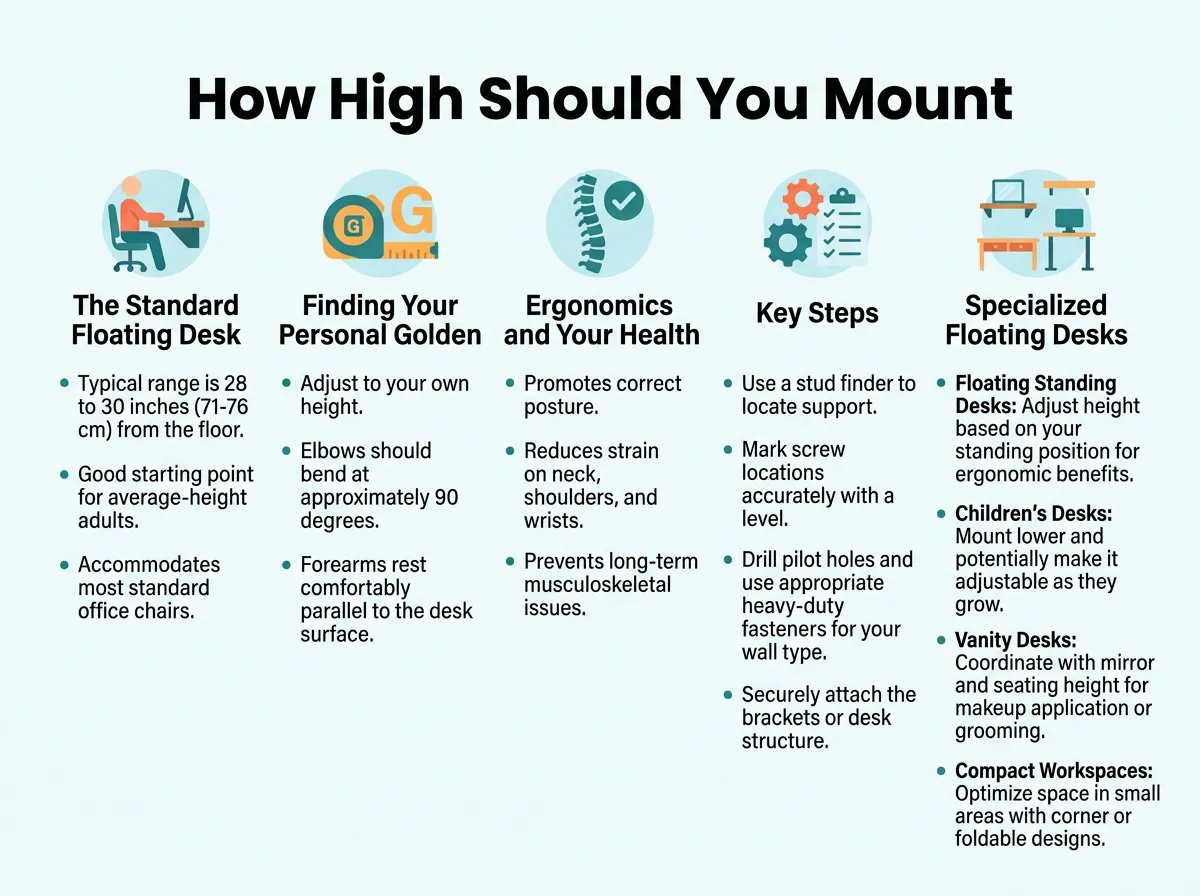
How High Should You Mount a Floating Desk? — key points at a glance
The Elbow Test
This is the easiest and most accurate way to find your perfect desk height. First, sit in your favorite office chair. Adjust the chair so your feet rest flat on the floor. Your knees should bend at a comfortable 90-degree angle.
Next, relax your shoulders and bend your elbows at a 90-degree angle. Keep your upper arms relaxed and close to your sides. Now, have a friend measure the distance from the bottom of your elbow straight down to the floor. This exact measurement is your ideal desk height. If you want to build a custom setup, you can learn more about crafting your own workspace with a helpful DIY floating desk guide that matches your unique measurements.
Considering Your Chair and Armrests
Do not forget about your office chair when planning your installation. If your chair has armrests, they need to fit comfortably under the desk. Otherwise, you will not be able to pull your chair in close to your screen. This can cause you to lean forward, which ruins your posture over time.
Measure the height of your chair’s armrests at their highest and lowest settings. Ensure your floating desk is mounted high enough so the armrests can slide underneath with ease. This small detail prevents a lot of daily frustration.
Ergonomics and Your Health
Understanding how high should you mount a floating desk is not just about aesthetics. It is truly about your physical health. Spending hours at a poorly positioned desk can lead to chronic back pain, neck strain, and wrist issues like carpal tunnel syndrome.
Wrist and Elbow Position
When you type on your keyboard, your wrists should remain flat and neutral. They should not bend upward or downward. Your elbows should stay at or slightly above a 90-degree angle. If your desk is mounted too high, your wrists will bend upward constantly, which puts pressure on your tendons. If it is too low, you will naturally hunch your shoulders to reach the keys.
Screen Height and Eye Strain
Once you set your desk height, you must also think about your computer monitor. Your neck should remain completely relaxed while looking at the screen. The top third of your computer screen should be right at your eye level. If your floating desk is mounted correctly, you can easily use a monitor stand or a wall mount to get the screen to the perfect height. This prevents you from tilting your head down, which puts immense strain on your neck muscles.
Key Steps for a Safe Installation
A floating desk is only as good as its installation. Because it has no legs, all of the weight relies entirely on the wall brackets and your home’s wall structure. If you do not mount it correctly, it could fall and damage your expensive equipment or cause serious injuries.
Finding the Wall Studs
You must never mount a floating desk into drywall alone. Drywall anchors are simply not strong enough to hold a heavy desk, a computer, and the weight of your arms leaning on it. You must screw the mounting brackets directly into the wooden or metal studs inside your wall.
Use a reliable stud finder to locate the studs in your designated workspace. Mark them clearly with a pencil. To ensure you have a secure build, reading an article on installing floating desks and bookshelves can give you extra confidence. It explains how to find studs safely and secure heavy items to the wall.
Double-Checking with a Level
Before you drill any holes, use a long spirit level. Draw a straight, level line across the wall at your chosen height. A desk that is even slightly tilted will cause pens to roll off. It will also look crooked and ruin the clean aesthetic of your room. Take your time during this step to get it perfectly straight.
Specialized Floating Desks
Not all floating desks are used for standard adult office work. You might be installing one for your child, or perhaps you are setting up a tiny writing nook in a tight corner of your home.
Kids’ Floating Desks
Children need much lower desk heights than adults. A desk that is too high will make it hard for them to write, draw, and study comfortably. For younger children, a height of 22 to 25 inches (56 to 63 centimeters) is usually ideal. For teenagers, you can raise it closer to the standard adult height of 28 inches.
One major benefit of a floating desk for kids is that you can mount it higher as they grow. You can simply unscrew it, move it up a few inches, and remount it. This makes it a highly versatile piece of furniture that grows alongside your child over the years.
Small Space and Corner Desks
If you are working with a very small room, a corner floating desk is an excellent option. It utilizes unused space without taking up valuable floor area. In tight spaces, you might also want to pair your desk with floating shelves above it. This keeps your desktop clear of clutter. For advice on choosing materials, sizes, and understanding weight capacities, check out a detailed wall mounted floating desk size height load guide. It will help you choose the right materials to support your daily workload.
You can also read more about using a versatile wall mounted desk to save space in bedrooms, hallways, or living rooms. These setups look incredibly stylish and modern while remaining highly functional for laptop use.
How to Test Your Height Before Drilling
Before you commit to drilling permanent holes in your wall, it is wise to do a test run. This simple trick can save you from making a painful mistake and having to patch up your drywall later.
The Mock-Up Method
Find a cardboard box or a temporary folding table. Stack books or adjustable risers on top of it until the surface reaches your desired mounting height. Place your laptop on this temporary setup and sit in your office chair. Try typing and browsing for ten to fifteen minutes.
Pay close attention to how your body feels during this test. Do your shoulders feel tense? Are your wrists bending too much? Adjust the height of the mock-up until you feel perfectly relaxed. Once you find that sweet spot, measure it carefully. That is the exact height you should use to mount your real floating desk.
Conclusion
Deciding how high should you mount a floating desk is the most critical step of your installation process. By taking the time to measure your chair, perform the elbow test, and locate your wall studs, you will create a beautiful, highly ergonomic workspace. This simple DIY project can completely transform your room. It offers a clean, clutter-free environment where you can work comfortably for years to come. Grab your tape measure, find your studs, and enjoy your new floating workspace!
Frequently Asked Questions
What is the standard height for a sitting floating desk?
The standard height for a sitting floating desk is between 28 and 30 inches (71 to 76 cm) from the floor to the top of the desk surface. This range fits most adults comfortably and aligns perfectly with standard office chairs.
How high should a floating desk be for a standing setup?
For a standing setup, a floating desk should typically be mounted between 38 and 42 inches (96 to 107 cm) high. The exact measurement should align with the height of your elbows when bent at a 90-degree angle while standing.
Can you mount a floating desk without studs?
No, you should never mount a floating desk without securing it to wall studs. Drywall alone cannot support the weight of the desk, your computer, and the physical pressure of you leaning on it while working.
How do I calculate the perfect custom desk height for my body?
Sit in your chair with your feet flat on the floor and bend your elbows at a 90-degree angle. Measure the distance from the bottom of your elbow to the floor to find your ideal custom desk height.
How high should a floating desk be for children?
For younger children, a floating desk should be mounted between 22 and 25 inches (56 to 63 cm) high. As they grow into teenagers, you can gradually raise the desk to the standard adult height of 28 to 30 inches.
Should I measure to the top or bottom of the floating desk?
You should always measure to the top of the desk surface. However, make sure to check the desk’s thickness to ensure there is still enough clearance underneath for your knees and chair armrests.
