



The ideal placement for an L-shaped desk depends on your room size and work style, but tucking it into a corner is the most popular way to maximize floor space. Alternatively, placing it in the center of the room facing the entrance creates a commanding, professional setup. No matter which you choose, ensure the desk sits perpendicular to windows to prevent screen glare.
You just bought a brand-new desk. It has a sleek L-shape, and it looks beautiful. It has plenty of room for your computer, your notes, and your coffee. But as you stand in the middle of your room, you might feel stuck. Where is this big piece of furniture supposed to go? It is not like a small, flat desk. You cannot just slide it against any wall and call it a day.
Because L-shaped desks have two sides, they take up a unique amount of space. If you put them in the wrong spot, your room can feel very small. It might also feel dark or messy. If you are asking yourself, Where Should You Put an L-Shaped Desk in a Room?, do not worry. This is a very common problem for remote workers and students alike.
In this guide, we will look at the best ways to arrange your workspace. We will talk about using corners, facing doors, and dealing with window light. We will also share simple tips to make your office feel cozy and productive. Let us find the perfect home for your new desk.
Key Takeaways
- Corner Placement: Tucking your desk into a corner is the ultimate way to reclaim wasted floor space and minimize visual distractions.
- The Command Position: Facing the door with your back to a solid wall builds confidence, enhances security, and looks professional on video calls.
- Manage Glare: Always position your workspace perpendicular to windows rather than directly in front of or behind them to avoid eye strain.
- Ergonomic Seating: Sitting in the inner curve of your desk gives you easy, equal access to both wings of your workspace.
- Cable Management: Plan your desk placement near wall outlets to keep cords hidden and avoid dangerous tripping hazards.
📑 Table of Contents
The Classic Corner Placement
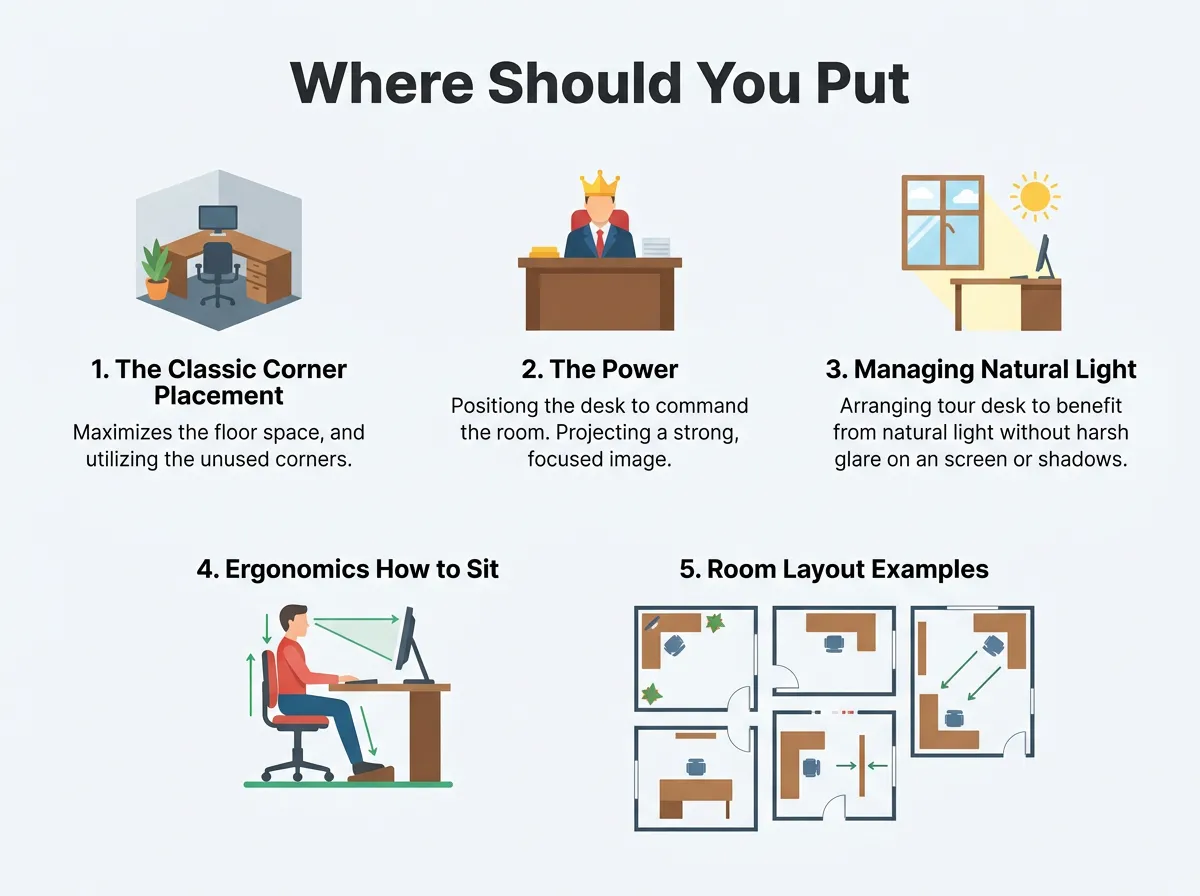
When deciding Where Should You Put an L-Shaped Desk in a Room?, the corner is the first place most people look. This is the classic layout, and it works wonders. Pushing both back sides of the desk against the walls helps you maximize neglected space that usually goes to waste.
Reclaiming Your Floor Space
Floor space is very important, especially in small rooms. An L-shaped desk fits into a corner like a perfect puzzle piece. It keeps the center of the room open and clear. This makes your room feel much larger. It also gives you plenty of room to roll your office chair around without hitting your bed or bookshelves.
Cutting Down on Daily Distractions
Sitting in a corner means your eyes stay on your work. You cannot see the TV, the unmade bed, or people walking by the door. This layout is great if you struggle to stay focused. But staring at walls all day can feel a bit lonely. You can fix this by hanging nice art, a calendar, or shelves on the walls right in front of you.
The Power of the Command Position
You do not have to hide your desk in a corner if you have a larger room. Instead, you can try a layout called the command position. This setup is inspired by old design principles. When you ask yourself, Where Should You Put an L-Shaped Desk in a Room?, the command position offers a powerful answer.
Where Should You Put an L-Shaped Desk in a Room? — key points at a glance
What is the Command Position?
To use the command position, you place your desk so your back is to a solid wall. You sit facing the main door of the room. But you should not sit directly in line with the door. One wing of your L-shaped desk will touch the wall, while the other wing sticks out into the room. This creates a small wall between you and the doorway.
This layout helps you feel safe and in control. You will never get scared by someone sneaking up behind you. Knowing where to put your desk can change how you feel about your work. Sitting this way makes you feel confident and ready for anything.
A Clean Backdrop for Video Calls
The command position is also perfect for online meetings. Since you sit with your back to a solid wall, you do not have to worry about family members walking behind your camera. You can hang nice pictures or place some tall plants behind you. This gives you a professional background for every call.
Managing Natural Light and Windows
Light is a major factor in how well you work. Bright light can wake you up, but it can also cause bad glare on your screens. You must find the right balance when placing your desk.
Place Your Desk Perpendicular to Windows
The best rule is to place your desk perpendicular to the windows. This means the window will be on your left or right side. If your desk is right in front of a window, the bright sun will hurt your eyes. If the window is behind you, it will reflect off your screen. This causes terrible glare and makes it hard to see your work.
Enjoying the View Without the Glare
By putting one part of your L-shaped desk near a window, you get the best of both worlds. You can look to the side to see the outdoors and get fresh sunlight. But your screens will stay in the shade, making them easy to read. This small change keeps your eyes happy and your brain alert.
Ergonomics: How to Sit at Your Desk
Choosing where to put the desk is only half the battle. You also need to think about how you sit. L-shaped desks have unique shapes that can help your posture if you use them correctly.
Sit in the Inner Curve
For the best experience, you should sit right in the inner bend of the “L”. Some people sit on only one straight side of the desk. This leaves the other side too far away to use. Sitting in the middle curve gives you a wrap-around work area. You can turn your chair to write on one side and type on the other.
Before you do this, check your desk style. You should see if you should sit in the corner of an L-shaped desk based on how it is made. Some desks have a sharp, pointy corner that is hard to sit near. Other desks have a smooth, curved shape that is perfect for sitting in the center.
Organize Your Reach Zones
Keep your most important tools close to you. This includes your mouse, keyboard, and phone. Use the far ends of the desk for things you do not use very often. This can include your printer, books, or lamps. This keeps your main area clean and stops you from hurting your shoulders.
Room Layout Examples for Different Spaces
There is no single correct answer to Where Should You Put an L-Shaped Desk in a Room?, but seeing examples can help. Let us look at two common rooms.
The Cozy Shared Bedroom
If you work in your bedroom, you want to save space. Put your desk in the corner furthest from your bed. If you can, use a screen or a tall shelf to hide your bed from view. This keeps you focused on work during the day and helps you sleep better at night.
The Large Home Office
If you have a whole room for your office, you have more options. Try using the command position in the middle of the room. You can also add a nice rug under the desk. If you want a setup that works well for productivity, a classic home office and study setup is the way to go. This leaves plenty of room for guest chairs or extra bookshelves.
Practical Tips for Your Final Setup
Before you move your heavy desk, check these last few items off your list.
Find the Power Outlets
Your computer, monitors, and chargers all need power. Look for the wall outlets before you place your desk. Try to keep your desk close to these outlets. This stops you from having to run long cords across the floor, which can cause trips and falls.
Hide Your Cables
L-shaped desks have a lot of space, which means a lot of wires. Use simple zip ties or cable trays under the desk to keep cords neat. A clean desk makes you feel calm. It also makes your room look professional and tidy.
Conclusion
We hope this guide helped you figure out Where Should You Put an L-Shaped Desk in a Room?. Finding the perfect spot does not have to be hard. Whether you slide it into a quiet corner to save space or place it in the center of the room to feel like a boss, the choice is yours. Keep your light sources in mind, stay close to outlets, and sit comfortably. With these easy tips, you will create a beautiful, productive workspace that you love to use every single day.
Frequently Asked Questions
Can you put an L-shaped desk in the middle of a room?
Yes, you can absolutely place an L-shaped desk in the middle of a room. This is often called the command position, where one wing touches a wall and the other extends outward to face the doorway. This setup works best in larger rooms and creates a very professional look.
Which way should an L-shaped desk face?
Ideally, your desk should face the entrance of the room so you can see who enters without turning around. If you prefer a corner placement, ensure your monitors are positioned to minimize reflection from doors and windows. This keeps your workspace functional and comfortable.
Is it bad to put an L-shaped desk directly in front of a window?
Yes, putting your desk directly in front of a window can cause severe eye strain due to the bright background light competing with your screens. It is much better to place your desk perpendicular to the window. This allows you to enjoy the view to your side without facing direct sunlight.
Should I sit in the corner bend of an L-shaped desk?
Sitting in the inner curve of your L-shaped desk is highly recommended because it keeps both sides of the desk within your natural arm’s reach. However, you should check your desk style first. Some desks have sharp 90-degree corners that are uncomfortable, while others are curved specifically for center seating.
How do I manage cords on an L-shaped desk?
The best way to manage cords is to position your desk close to wall outlets to prevent long wire runs. Use adhesive cable clips, zip ties, or under-desk cable trays to route your wires along the frame. This keeps your floors clear of tripping hazards and keeps your office looking tidy.
How do I separate my work area from my bedroom if I use an L-shaped desk?
Place your desk in the corner furthest from your bed to create physical distance between your sleep and work spaces. You can also use a tall bookcase, a folding screen, or a large plant as a visual divider. This simple boundary helps your brain transition from work mode to rest mode at the end of the day.
