



Conquer paper clutter forever by learning the best way to sort, purge, and systemize your documents. This guide shows you how to organize a filing cabinet using simple, color-coded categories and a smart maintenance routine. You will transform your messy drawers into a neat, stress-free storage system in just a few hours.
Do you dread opening your desk drawers? You are not alone. Many of us look at our paperwork and feel a wave of stress. Loose sheets sit on the kitchen counter. Important bills hide under junk mail. When you need to find your tax return, you spend hours searching. It does not have to be this way. You can regain control of your space and your mind.
Today, we will learn how to organize a filing cabinet from start to finish. We will walk through the entire process together. You do not need to be a professional organizer to do this. With a few simple steps, you can create a clean, easy system. Let us turn that messy pile of paper into a neat, stress-free zone.
Key Takeaways
- Purge before organizing: Empty all drawers and sort items into keep, toss, and shred piles before buying any supplies.
- Categorize with intention: Group documents into broad buckets like financial, personal, medical, and work-related files.
- Use color-coding: Assign specific colors to main categories to help your brain find files in a matter of seconds.
- Adopt a sub-folder system: Put manila folders inside hanging folders to break down large categories into neat, manageable sections.
- Apply the one-in, one-out rule: Maintain your neat drawers by removing old versions of documents whenever you add a new one.
- Perform an annual review: Dedicate an hour every January to purge expired files, keeping your system lightweight and useful.
📑 Table of Contents
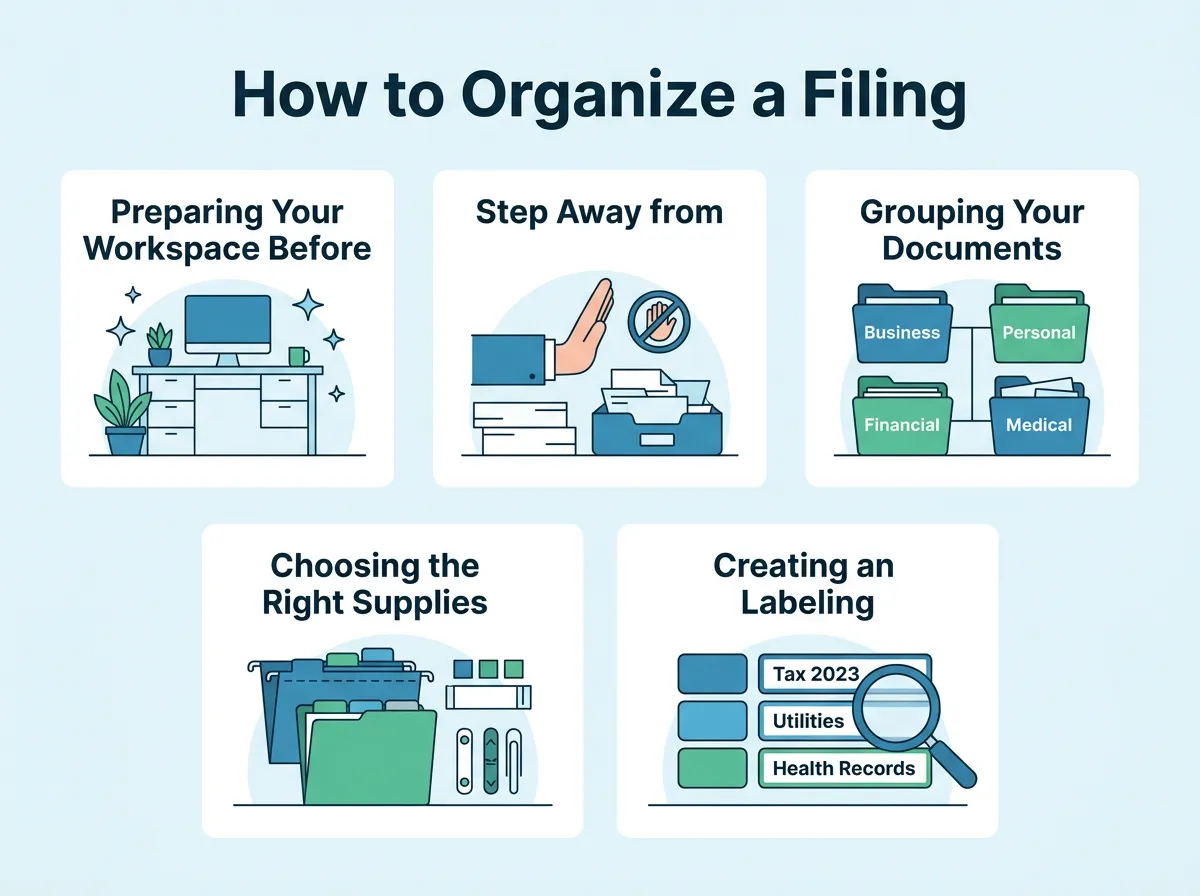
Preparing Your Workspace Before You Start
Before you jump in, you must get ready. Preparing your space will save you time later. It keeps you from getting distracted halfway through the process.
Gather Your Tools
You will need a few basic tools to get the job done. Grab a large trash can and a recycling bin. You will also need a paper shredder for private files. Have your new folders close by. Keep a black marker and some sticky notes on hand. This makes it easy to write temporary labels while you sort.
Set a Timer
Do not try to do this all in one day if you have years of paper. Set a timer for one hour. Work fast until the timer goes off. Then, take a break. This stops you from feeling overwhelmed. It keeps the task fun and fast.
Step Away from the Clutter: The Great Paper Purge
Before you buy cute labels or fancy folders, you must look at what you have. You cannot organize trash. To start, you need to empty your current drawers. Pile all the papers on a large table or the floor. It might look worse before it looks better, but this is a vital step.
How to Organize a Filing Cabinet — key points at a glance
Keep, Toss, or Shred?
As you look at each piece of paper, ask yourself a simple question. Do I really need this? You will put each item into one of three piles. The first pile is “Keep.” These are active files you must hold onto. The second pile is “Toss.” These are papers you do not need, like old grocery lists or flyers. The third pile is “Shred.” These contain personal info. Think of old bank statements or credit card offers. Be sure to shred them to protect your identity. You can find detailed steps on how to easily organize a filing cabinet to help jumpstart this sorting phase.
The Keep Pile Checklist
What should stay in your keep pile? Here is a quick guide. Keep tax returns for seven years. Keep home purchase papers for as long as you own the home. Keep active insurance policies. Keep birth certificates and social security cards forever. If you can find the paper online in two minutes, you can likely toss the physical copy.
Grouping Your Documents with Purpose
When looking at how to organize a filing cabinet, grouping is key. Now that you have purged the waste, look at your keep pile. You need to group these papers into big buckets. This makes it easy to find them later. If you do not group them, your cabinet will become a jumble again.
Financial Files
Group your bank statements, tax forms, and utility bills here. You can also put credit card info in this group. Keeping your money papers in one spot makes tax season easy. You will not have to hunt for your tax documents when spring arrives.
Personal and Household Records
This group is for your family. Put medical records, school papers, and pet vet bills here. You can also add home repair receipts and car titles. Each family member can have their own small section within this group to keep things simple.
Work and Professional Documents
If you work from home, keep your job files separate. This includes contracts, resumes, and project notes. Keeping work away from personal files helps you focus. It keeps your mind clear and your workspace professional.
Choosing the Right Supplies and Tools
You have your piles ready. Now, you need the right tools. Good tools make organizing fun. They also help your system last for years. You can view excellent file cabinet organization tips online to find the perfect gear for your home office.
Hanging Folders vs. Manila Folders
Hanging folders are the backbone of a good cabinet. They slide easily on the metal rails. Manila folders sit inside the hanging folders. Use hanging folders for your big categories. Use manila folders for the sub-files inside. For example, your hanging folder might say “Auto.” Inside, you have manila folders for “Car Insurance” and “Car Repairs.”
The Power of Color Coding
Color coding is a game changer. It helps your brain find files in seconds. You do not even have to read the labels to know where to look. You can use green folders for money, blue folders for medical files, and red folders for vital personal documents. This simple visual trick makes the system very easy to use.
Creating an Intuitive Labeling System
The secret to a great cabinet is clear labels. If you cannot read the label, you will not use the file. A bad label leads directly to lost papers.
Alphabetical vs. Chronological Order
For most home files, alphabetical order works best. Put “Auto” under A, “Home” under H, and “Taxes” under T. For bills or bank files, chronological order is great. Put the newest papers at the front of the folder. This keeps your files up to date and easy to browse.
Labeling Best Practices
Use a label maker if you have one. Printed labels are easy to read. If you write by hand, use a black marker and print clearly. Keep your terms simple. Do not write “Papers for the Red Honda Civic.” Just write “Honda Civic.” Short names are always best.
Maintaining Your Organized Cabinet
Once you learn how to organize a filing cabinet, keeping it tidy is the next challenge. Your job is not done just because the folders are neat. A good system only works if you maintain it. You can learn more about keeping a neat home desk on filing cabinet organization methods that reduce daily clutter.
The One-In, One-Out Rule
When you put a new paper in, see if you can take an old one out. Did you get a new car insurance card? Shred the old one. This stops your files from getting too thick. It keeps your cabinet clean without extra work.
Setting Up an Annual Review
Set a date once a year to clean your cabinet. January is a great time. This is when you prepare for taxes. Go through each folder. Toss what you do not need anymore. This annual clean-up takes less than an hour once your system is set.
Conclusion
Learning how to organize a filing cabinet is a gift to yourself. It saves you time. It lowers your daily stress. You will never have to hunt for a lost bill again. Now, take a deep breath and look at your tidy space. You built this system. Keep it up, and enjoy the peace of mind that comes with a clutter-free home.
Frequently Asked Questions
How long should I keep tax documents?
You should keep your tax returns and supporting documents for seven years. This covers the time frame in which the IRS can audit your files. Store them in a safe, labeled folder.
Can I use a digital system instead of a filing cabinet?
Yes, you can scan your papers and save them on a hard drive or cloud storage. However, you should still keep physical copies of vital documents like birth certificates and deeds. A hybrid system often works best.
What color-coding system do you recommend?
Use green folders for financial papers, blue for medical files, and yellow for home records. Red is great for vital documents like passports and wills. This makes visual searching very fast.
How do I stop papers from falling down in the drawer?
Use plastic drawer dividers or slide hanging folders onto metal rails. Make sure the folders are snug but not packed too tight. If a drawer is empty, use a heavy book as a bookend to keep folders upright.
What is the difference between hanging folders and manila folders?
Hanging folders have metal hooks that slide on rails to hold large categories. Manila folders are smaller, tabbed folders that sit inside hanging folders to group specific items. Together, they create a neat system.
How often should I purge my filing cabinet?
You should purge your filing cabinet at least once a year. Doing this during tax season is easiest because you are already looking at your financial files. It takes less than an hour to maintain.
